What Happens When a Pipe Bursts Inside Your Home
Burst pipes don’t give you a heads-up. One minute, everything’s fine. The next minute, you feel like you’re on the lower deck of the Titanic.
But what happens when a pipe bursts in your home, exactly? Beyond the obvious unwanted shower, water can quickly seep into flooring, walls, insulation, and electrical systems. Even a small rupture can cause serious water damage if it’s not stopped quickly.
The good news? Understanding what happens when a pipe bursts helps you act fast, minimize damage, and avoid costly repairs.
Here’s what happens in those critical first minutes, how damage spreads, and what you need to do before things get worse.
What Happens in the First Few Minutes?
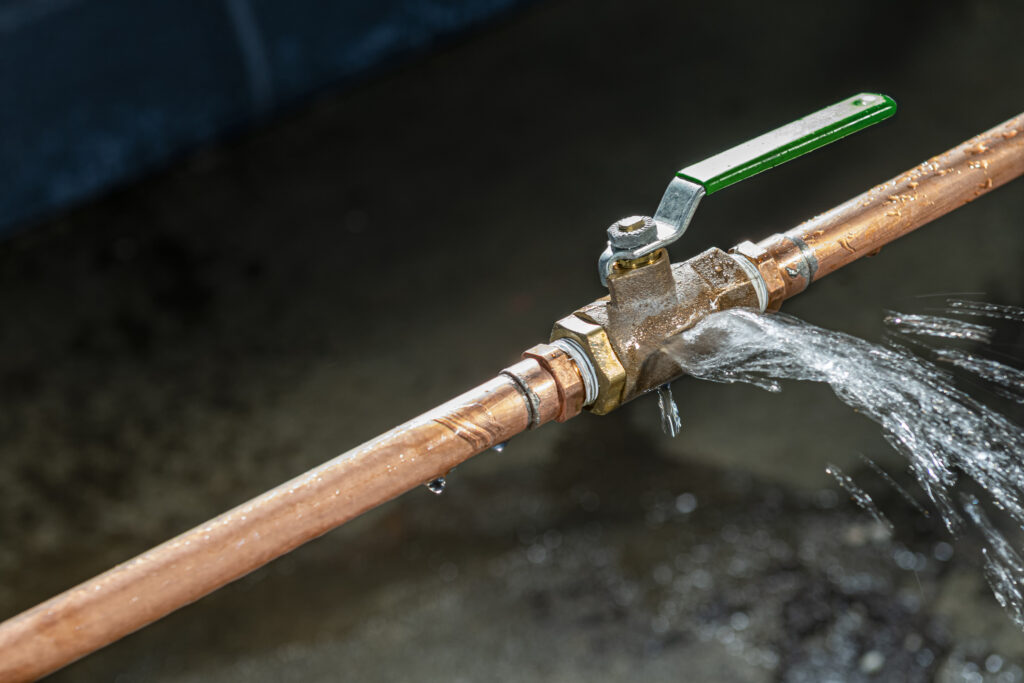
When a pipe bursts, pressurized water sprays all over your home, potentially flooding floors, soaking walls, and reaching electrical systems within minutes. Water pressure may weaken at nearby fixtures, while hidden leaks can spread unnoticed. Shutting off the main water supply immediately is the most effective way to stop additional flooding.
Let’s break down those first chaotic minutes.
Rapid Water Spread
As gravity goes, so goes the water. This means it rarely stays where the pipe broke. It can find its way under flooring, travel through wall cavities, and drip into rooms below. A pipe bursting upstairs can damage downstairs ceilings before you even realize there’s a leak.
Pro Tip: Don’t assume the visible puddle is the only problem. Water can travel several feet from the original breach, especially into floors and behind walls.
Water Pressure Loss in the Home
A sudden drop in water pressure also indicates a plumbing leak.
If your shower suddenly turns into a little trickle, check other fixtures. Widespread pressure loss accompanied by strange water sounds or mysterious moisture could indicate a burst supply line.
Potential Electrical Hazards
Water and electricity make a terrible team. Floodwater reaching outlets, wiring, appliances, or electrical panels can create shock and fire hazards.
Never enter standing water near potentially energized equipment. If you can’t disconnect electricity safely from a dry location, stay away and contact a qualified professional.
How Pipe Burst Damage Progresses Over Time
When you understand the burst pipe water damage timeline, you know why water damage restoration pros treat burst pipe scenarios as emergencies.
Note: The following timeline is illustrative. Actual damage depends on key factors such as:
- Water volume
- Affected materials
- Temperature
- How quickly cleanup begins
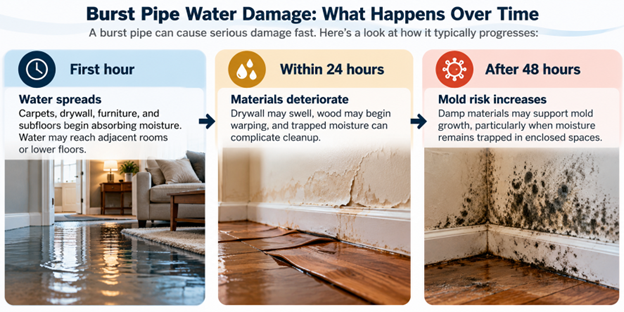
Within the First Hour
Almost immediately, water starts soaking porous materials. Carpeting, drywall, insulation, and unfinished wood are all vulnerable.
The longer water is left standing, the farther it can migrate.
Pro Tip: When it’s safe, take clear pictures and/or video of the damage. Documentation helps support an insurance claim and establish the condition of affected materials before the cleanup process begins.
Within 24 Hours
Moisture continues penetrating building materials. Wood flooring may swell, drywall can soften, and adhesives may lose their grip.
Even after visible water is gone, hidden moisture may remain.
After 48 Hours (Mold Risk)
Here’s where things can get especially unpleasant.
Wet materials should generally be dried within 24–48 hours to help prevent mold growth.
But mold can sometimes develop sooner under favorable conditions like warm, humid air, so don’t treat the 48-hour window as a mold-free timeframe.
Pro Tip: Household fans alone may not dry saturated wall cavities or subfloors. Professional moisture meters and drying equipment can help identify and dry hidden moisture properly.
Areas of the Home Most Affected by a Burst Pipe
A burst pipe can wreak havoc beyond the room where it occurred. These three areas deserve particular attention.
Flooring and Subflooring
Water can seep beneath hardwood, laminate, tile, and carpeting.
Common consequences include:
- Warped boards
- Lifted flooring
- Damaged padding
- Weakened subfloor materials
Even waterproof flooring can sometimes trap moisture underneath.
Walls and Drywall
The worst damage often happens in the places you can’t see.
Common signs of a burst pipe inside walls include:
- Bubbling or peeling paint
- Soft, swollen, or discolored drywall
- Unexpected damp spots
- Water stains spreading across ceilings
- Dripping or rushing sounds behind walls
A hidden rupture may go unnoticed until significant damage becomes obvious.
Electrical Systems
Water exposure can damage outlets, wiring connections, appliances, and electrical panels. If electrical components are affected by flooding, they should be evaluated by a qualified electrician before use.
Never assume an outlet is safe just because the exterior looks dry.
What to Do the Moment a Pipe Bursts
Not sure what to do when a pipe bursts? Your priorities are simple: stop the water, stay safe, and limit further damage.
Just follow our six-step emergency burst pipe checklist:
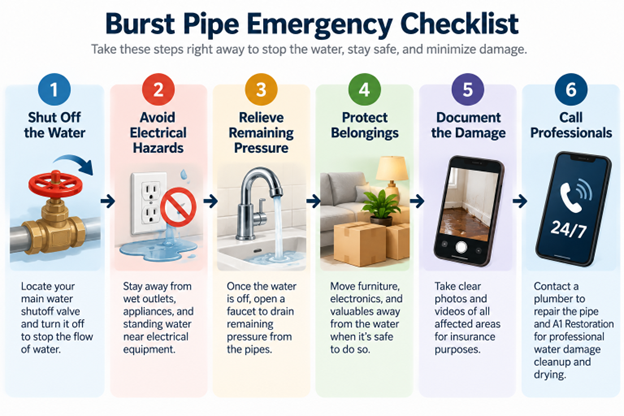
Pro Tip: Everyone in the household should know where your main water shutoff valve is before an emergency. Test it periodically. Have a plumber replace it if it’s stuck or leaking.
What Causes Pipes to Burst Inside a Home?
Pipes can burst for many reasons: freezing temperatures, corrosion, excessive water pressure, aging plumbing, or physical damage. Frozen pipes are a major hassle because expanding ice creates pressure that can rupture the pipe, revealing the leak only after thawing.
Regular plumbing inspections, pipe insulation, and proper water pressure can help prevent trouble. And when prevention isn’t enough, A1 Restoration is available 24/7 for emergency water extraction, structural drying, and water damage cleanup.
Dealing with a burst pipe? Contact A1 Restoration today to minimize the damage and get your home back to normal.