What Happens During Water Damage Restoration
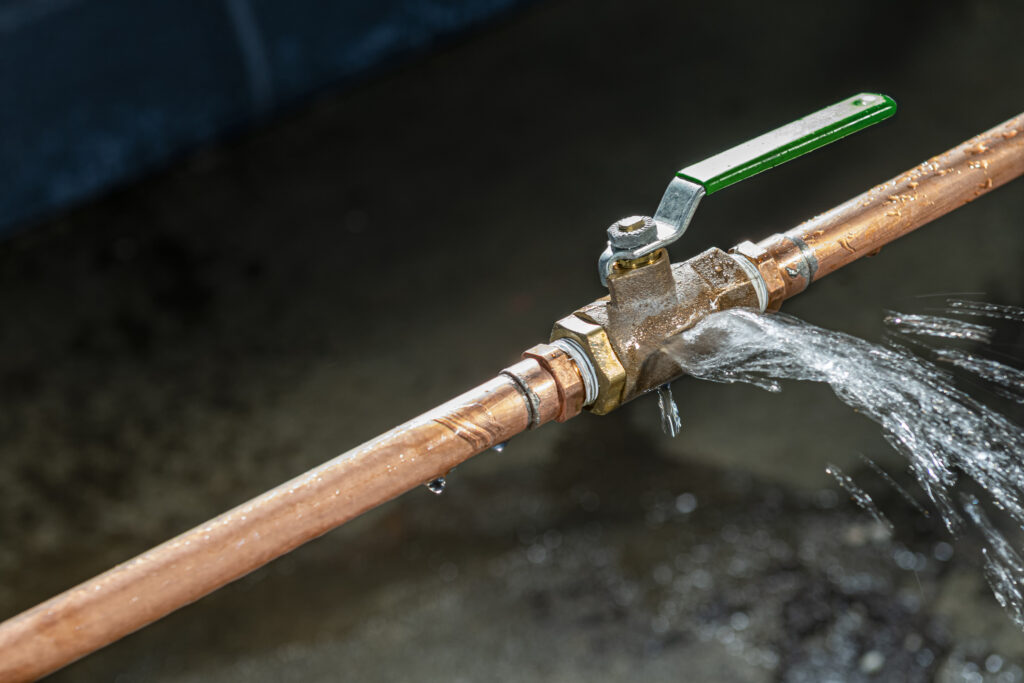
Finding water where it definitely shouldn’t be is never a good way to start the day. Whether a burst pipe, overflowing appliance, roof leak, or storm is to blame, getting the visible water out is just step one in solving the problem.
A common question homeowners ask in this situation is, “What happens during water damage restoration?”
Water damage restoration professionals assess how far the moisture has traveled, extract standing water, dry affected materials, clean and sanitize where appropriate, monitor moisture levels, and address damaged materials. The goal isn’t to make your floors look dry. It’s to thoroughly dry the structure and prevent secondary problems that accompany water damage.
Time is of the essence. If water isn’t dried in the 24–48-hour window, the probability of mold growth significantly increases.
Here’s what homeowners can expect from the process.
The Water Damage Restoration Process
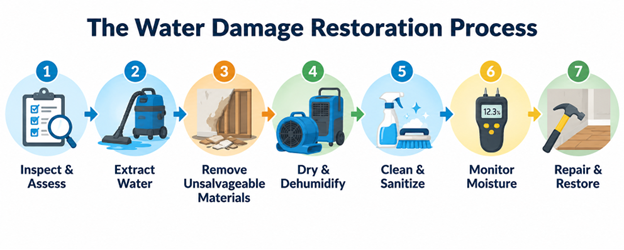
The water damage restoration process involves:
- Inspecting the property
- Locating affected areas
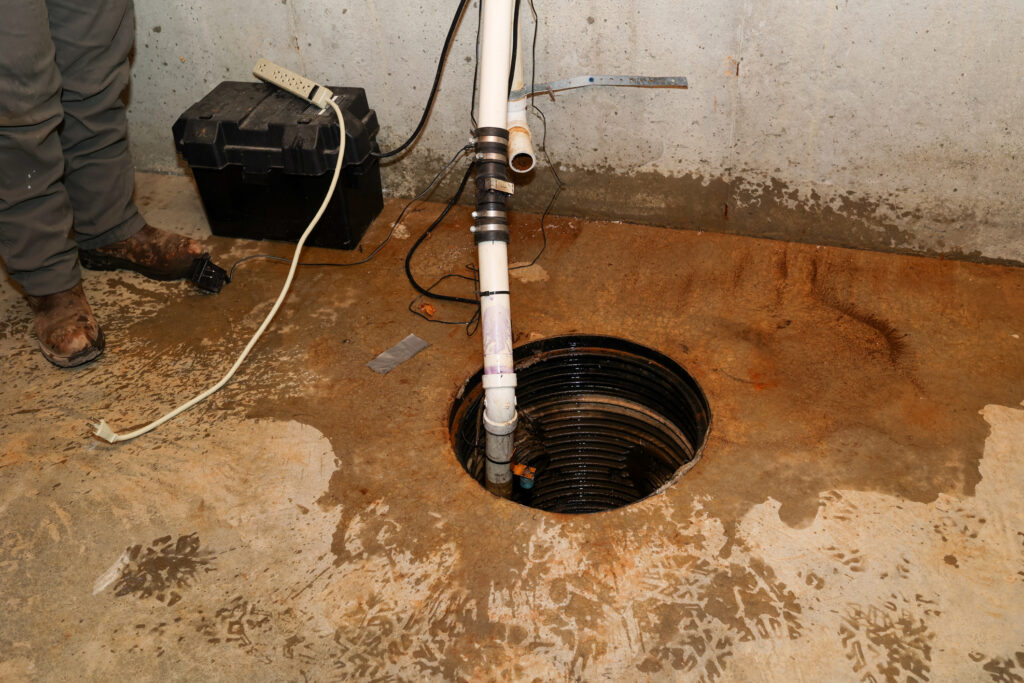
- Extracting standing water
- Drying and dehumidifying the structure
- Cleaning and sanitizing salvageable materials
- Monitoring moisture levels
- Repairing or replacing damaged materials
Inspection and Damage Assessment
The first step of the restoration process is to have professionals determine the source of the water and how much of the property is damaged.
That means examining flooring, drywall, ceilings, cabinets, insulation, and other materials, not just the obvious puddle. Moisture often travels underneath flooring or inside wall cavities. This is why rooms sometimes appear dry while still holding on to unwanted moisture.
Technicians will also document damaged areas and determine which materials can be dried and which need to be replaced.
Pro Tip: When it is safe to do so, take clear pictures of the damage before cleanup or disposal. FEMA recommends taking photos or videos of damaged property before cleanup and retaining repair receipts for potential insurance claims.
Water Extraction
Next comes the satisfying part: getting the water out.
Water extraction pumps and professional wet vacuums are capable of removing large quantities of standing water much faster than towels, buckets, and sheer determination. Once most of the water is removed, the focus shifts to trapped moisture in building materials and the surrounding air.
Depending on the scale of the damage, wet carpet padding, drywall, insulation, or other materials may need to be removed and replaced if they can’t be safely cleaned and dried.
Cleaning and Sanitizing
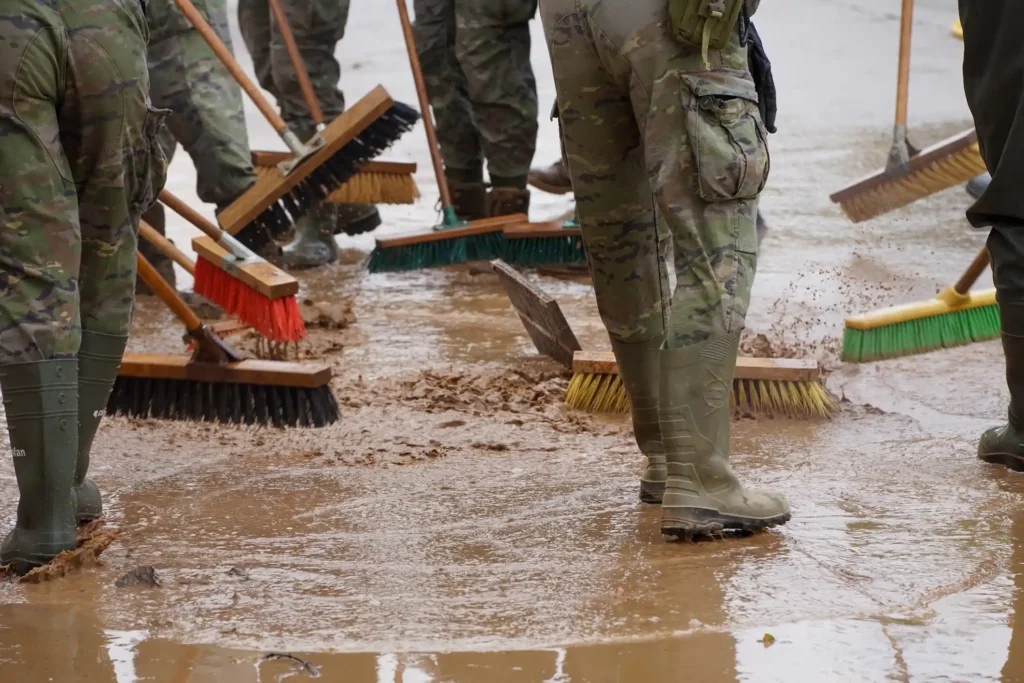
Water damage doesn’t always involve clean water. Floodwater, sewage backups, and other contaminated sources can introduce bacteria, chemicals, and debris into a home. Floodwater often contains sewage or chemicals, adding more risk to the cleanup process.
In that case, restoration includes cleaning and sanitizing affected surfaces and getting rid of any materials that can’t be restored safely.
Equipment Used During Water Damage Restoration
Professional restoration involves more than a few workers rolling up the world’s biggest shop vac. Specialized water damage restoration equipment helps technicians:
- Remove water
- Promote evaporation
- Control humidity
- Determine when materials are dry
Water Extraction Pumps
Extraction equipment removes standing water from floors, carpets, and other accessible areas. Removing bulk water quickly expedites structural drying.
Industrial Air Movers and Dehumidifiers
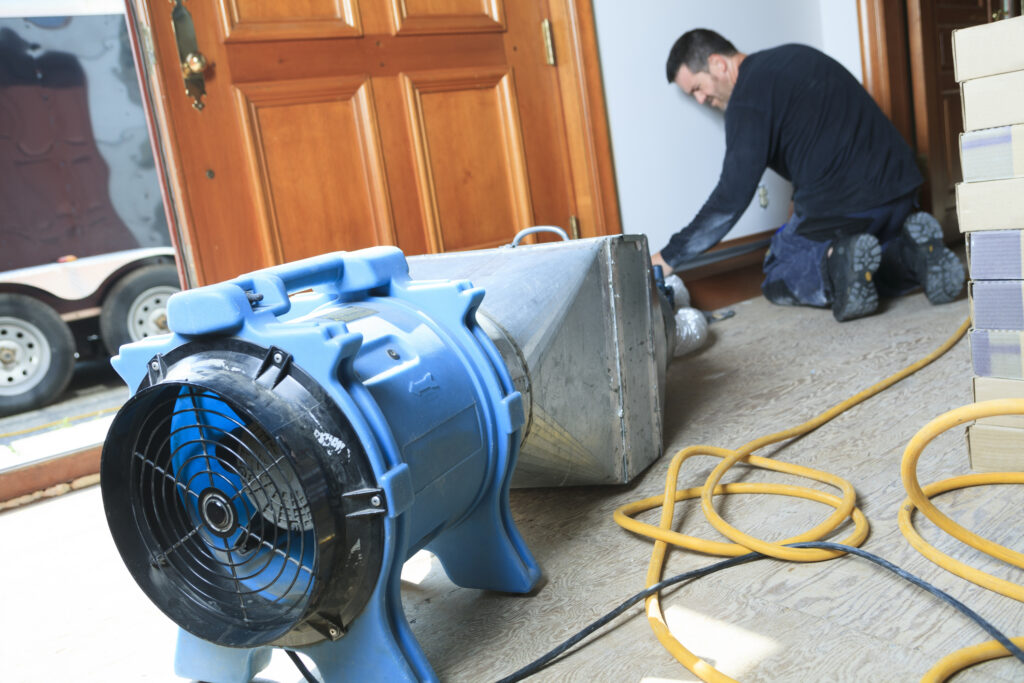
Air movers increase airflow across wet surfaces to help moisture evaporate, then dehumidifiers remove moisture from the surrounding air.
Moisture Meters
Just because a wall feels dry doesn’t mean it’s actually dry.
Moisture meters help technicians find and monitor moisture in building materials. Instead of relying on surface appearances alone, readings taken throughout the restoration process help determine whether an affected area is continuing to dry or still retaining moisture.
How Long Does Water Damage Restoration Take?
Unfortunately, there’s no universal timeline for how long water damage restoration takes. It’s a case-by-case basis. Drying can take several days, while repairs may extend the overall project by weeks depending on the level of damage.
A simple way to gauge an approximate timeframe is to break it into minor and major damage categories.
Minor Damage Timeline
A small leak affecting limited materials that is quickly dealt with may only require a few days of drying and minimal repair.
But even small incidents deserve immediate attention. Try to clean and dry (or remove if necessary) all wet materials within 1–2 days after flooding. This will help prevent mold growth.
Major Damage Timeline
Extensive flooding requires a much longer process. If water has gotten into walls, flooring, insulation, cabinets, or multiple rooms, the project may involve:
- Demolition
- Structural drying
- Cleaning
- Reconstruction
- Finishing work
In other words, extraction might be quick, but a full kitchen or bathroom reno will obviously take a bit longer.
Factors That Affect Timeline
Several variables determine how long restoration takes:
- Amount and source of water
- Length of time materials remained wet
- Size of the affected area
- Types of materials involved
- Accessibility of trapped moisture
- Contamination or mold growth
- Extent of repairs or reconstruction required
Also, view drying and reconstruction as separate phases. Properties often reach appropriate moisture levels well before the completion of cosmetic or structural repairs.
What to Expect as a Homeowner During Restoration
Always expect noise and some disruption while air movers and dehumidifiers run. Technicians will return to check moisture levels, adjust equipment, remove damaged materials, and document progress. Before you throw out any damaged belongings, make sure to photograph them and check with your insurer.
And never enter standing water if electrical hazards may be present.
When Should You Call a Water Damage Restoration Company?
Call the pros when water has spread into walls or flooring, is possibly contaminated, can’t be removed quickly, or poses electrical or structural risks.
Acting fast is key because mold is just an extra headache you don’t want in the already stressful water damage mix.
For leaks, flooding, storms, and plumbing emergencies, A1 Restoration provides 24/7 emergency water damage restoration services. The sooner extraction and drying begin, the better your chances are of limiting further damage.