What to Expect During a Flood Cleanup Appointment
Scheduling a professional flood cleanup after your home floods is the first step toward getting back to normal. But if you’re new to water damage, you may be wondering what happens when the restoration team actually shows up and gets to work.
When you know what to expect during a flood cleanup appointment, it makes an already stressful situation easier to handle. The initial visit involves inspecting damaged areas, flagging safety concerns, removing standing water, measuring hidden moisture, and setting up professional drying equipment.
From there, experts will monitor the drying process and determine what materials can be saved or need to be replaced.
Here’s how the flood cleanup process works, and how you can help things go as smoothly as possible.
How to Prepare Before the Flood Cleanup Crew Arrives
You don’t need to turn your home into a well-organized worksite before the technicians arrive. After all, we’re talking about a flood.
However, there are a few small steps you can take to help crews get to work faster.
Clear Access to Affected Areas
When it’s safe to move lightweight obstacles out of the way, clear entrances, hallways, and affected rooms. Make sure technicians have access to the water source, electrical panel, basement, crawl space, or other areas they may need to inspect.
Never enter standing water or move anything around that could expose you to electrical hazards, structural vulnerabilities, or black water contamination.
Pro Tip: Resist the urge to start tearing out wet drywall or ripping up carpet before professional inspection. Technicians need to document affected areas and materials first to determine what’s salvageable.
Move Valuables to a Dry Area
If you’re able to reach valuables safely, move them to unaffected areas. And this doesn’t just refer to jewelry and heirlooms. “Valuables” includes everything from important documents and family photos to artwork and medications.
It’s best to leave large furniture and waterlogged belongings where they are if moving them
could potentially lead to injury or exposure to contaminated water.
Have Documentation and Photos Ready
Take pictures and/or video of affected rooms and belongings before the cleanup process begins, especially if you expect to file an insurance claim.
Have all relevant insurance information ready along with anything you know about the flood:
- When it started
- Where the water came from
- Whether electricity or plumbing has been shut off
What Happens During Flood Cleanup
The exact cleanup procedure depends on the source of flooding, extent of damage, and duration of the water intrusion.
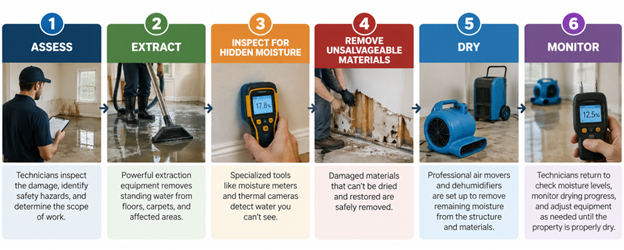
But the flood cleanup process explained simply looks something like this:
Initial Assessment
First, technicians will inspect damaged areas to get an idea of how far the water traveled and what materials are wet. This step usually involves moisture meters, thermal imaging equipment, or other tools that help detect moisture you can’t see.
They’ll also keep an eye out for safety issues and determine whether flooring, drywall, insulation, cabinets, or other materials can be dried and restored.
It’s important to note that the obvious puddle is rarely the whole problem. Water has an annoying habit of invading places it doesn’t belong.
Water Extraction
The next step really gets down to business. Professional extraction equipment is used to remove standing water and, when necessary, water trapped in carpet or other materials.
Extracting water quickly is important because prolonged moisture increases the potential for additional water damage. Drying water-damaged areas and belongings within 24–48 hours is recommended to prevent mold growth.
Technicians may also toss materials that can’t be safely or effectively dried.
Setting Up Drying Equipment
After standing water is removed, it’s time to place commercial air movers and dehumidifiers throughout the affected space. Placement isn’t random. Equipment is arranged strategically to encourage fast evaporation while dehumidifiers pull excess moisture from the air.
For the structural drying process to be fully effective, equipment may need to run nonstop for several days. Unless a technician tells you otherwise, don’t unplug or reposition drying equipment.
How Long Does a Flood Cleanup Appointment Take?
Because the range of what can cause flooding in your home is so wide, there isn’t one magic number to answer how long flood cleanup takes. A relatively small, contained plumbing leak will likely require far less work than a multi-room contaminated floodwater scenario.
Initial Visit Duration
The first appointment may take a few hours because technicians need time to thoroughly assess the property, extract water, document damage, and set up the drying system. Larger or more severe losses can extend that time frame.
Factors that affect the timeline include:
- Amount and source of water
- Number and size of affected rooms
- Materials involved
- How long the property has been wet
- Accessibility of wet areas
- Whether demolition or specialized cleaning is required
Homeowners should understand that the first appointment and the complete drying process are not the same thing.
Follow-Up Drying Monitoring
Drying is an ongoing process and usually continues after the crew has left. Technicians may return periodically to take moisture readings, evaluate progress, and adjust or remove drying equipment.
But just because a room looks dry doesn’t necessarily mean it truly is. Moisture can remain trapped under flooring, behind walls, and inside porous structural materials.
Pro Tip: Ask the technician what moisture readings they’re monitoring and what the target reading is to determine when drying is complete. That’s a much more effective measure than relying on sight and touch.
What Happens After the First Cleanup Appointment
After the first visit, the priorities shift from emergency water removal to controlled drying and recovery.
Technicians return periodically to monitor moisture levels and equipment performance. Once target drying levels are reached, equipment can be removed. Depending on the severity of damage, the next stage may involve:
- Additional cleaning
- Removal of damaged materials
- Repairs or reconstruction
Never turn off equipment yourself unless instructed otherwise by a technician. If you notice any unusual odors, new water spots, equipment issues, or other changes, report them promptly.
Floodwater often contains sewage, chemicals, debris, and other hazards. Don’t assume every flooded area is safe simply because the water is gone.
Questions to Ask the Flood Cleanup Technician
A good emergency restoration service will clearly explain what’s happening without requiring you to earn an honorary degree in structural drying first. Here are some important questions you should consider asking before or during the appointment:
Where did the water travel, including areas I can’t see?
Is the water potentially contaminated?
- What materials can be saved, and what needs to be removed?
- What drying equipment will you use?
- How long should the equipment remain running?
- How will you determine when the structure is dry?
- When will you return to check moisture levels?
- Are there rooms or areas we should avoid?
- What should I do if the equipment shuts off?
- What documentation will I receive for my insurance claim?
Knowing what happens during flood cleanup makes it easier to follow the process, protect your property, and prepare for what comes next.
If water has invaded your home, contact A1 Restoration for around-the-clock emergency water, fire, storm, and mold damage restoration services. Our experts will help get your home from soggy back to safe and dry in no time.