Why Structural Drying Takes Longer Than You Might Think
Okay, the standing water is gone. Now what?
The floors look dry. You’ve even pointed a few fans at the last damp remnants for good measure. So why is the restoration crew telling you the drying equipment needs to stay for a few more days?
Because water damage is tricky.
Moisture doesn’t politely ask where it can go. It seeps into drywall, settles beneath flooring, and hides inside wall cavities. Drying it out takes more than a fan and a little patience.
Understanding why structural drying takes longer than you might think can help you avoid lingering moisture, surprise mold growth, and costly repairs weeks after you thought your home was shipshape.
What Is Structural Drying?
Structural drying is the process of extracting excess moisture from a building’s structural materials, including:
- Drywall
- Wood
- Concrete
- Subflooring
Unlike surface drying, structural drying uses specialized equipment and moisture monitoring to remove moisture trapped inside materials and hidden spaces. Depending on the damage, the process can take several days or more.
Difference Between Surface Drying and Structural Drying
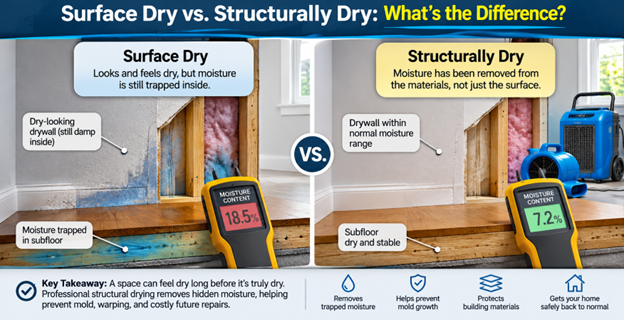
Surface drying deals with the moisture you can see and feel, while structural drying tackles the moisture that gets absorbed beneath the surface.
Think of a wet sponge. The outside might be dry, but that doesn’t mean the middle is. The same principle applies to your home. A floor can look and feel completely dry while the subfloor remains saturated.
Professional restoration teams use air movers, dehumidifiers, and specialized drying techniques to remove moisture throughout all affected materials.
Why It’s Necessary Beyond Visible Water Removal
Removing standing water is the first step.
According to the EPA, water-damaged materials should generally be dried within 24–48 hours to help prevent mold growth. Now, that doesn’t mean it’s possible to dry every structure completely within that window, but it does mean that starting cleanup and drying promptly is crucial.
Pro Tip: Don’t remove drying equipment just because a room feels comfortable again. Indoor humidity and trapped moisture are two very different things.
Reasons Structural Drying Takes Longer Than Expected
There are several factors that affect drying time after water damage, and they have little to do with how much water you first spotted. Materials, location, and surrounding conditions all play a role in how long the drying process will take.
Water Absorbed Deep Into Materials
Porous materials are like sponges. They absorb water through tiny openings. Once moisture penetrates deeply, it takes a lot longer to evaporate.
For example, a soaked wooden subfloor may extend the drying time even after the flooring above it appears to be fine. And the longer water sits, the more opportunities it has to seep into other surrounding materials.
Different Materials Dry at Different Rates
Drywall, hardwood, insulation, and concrete respond to moisture differently. Some materials release water relatively quickly under controlled conditions, while others stubbornly soak it up.
Drying speed also depends on:
- Material thickness and porosity
- Temperature and relative humidity
- Air circulation and equipment placement
- Duration of water exposure
- Whether moisture can escape from one or multiple surfaces
Note: Cranking up the heat isn’t a shortcut to dryness. Too much heat can actually damage certain materials or create unfavorable drying conditions.
Hidden Moisture in Wall Cavities
Here’s where things get particularly frustrating. Water can easily travel behind baseboards, into insulation, and through wall cavities without leaving visible surface stains. A wall might look perfectly normal while concealing enough moisture to cause water damage or mold later.
Professionals use moisture meters, thermal imaging, and targeted inspections to identify these areas. Thermal imaging helps locate temperature differences that warrant further inspection, but moisture meters are needed to verify moisture levels.
Typical Drying Timeline by Material Type
So, how long does structural drying take? Many water-damage projects require approximately three to five days of active drying, but severely saturated or hard-to-reach materials may take a week or two.
The following table provides general planning estimates, not guaranteed drying times.
|
Material |
Approximate drying time |
What affects the timeline |
|
Drywall |
2–5 days |
Saturation, insulation, wall cavities |
|
Woodflooring |
3–10+ days |
Wood species, thickness, trapped subfloor moisture |
|
Concrete |
Several days to weeks |
Slab thickness, moisture depth, floor coverings |
Drywall
Drywall often dries pretty quickly when exposure is limited, and the material remains intact. However, soaked insulation, prolonged exposure, or contaminated water may require removal rather than drying.
Wood Flooring
Wood absorbs moisture and can swell and warp as its moisture content changes. Professionals may use specialized floor-drying systems to remove trapped moisture. Drying must be controlled to minimize additional damage.
Concrete
Concrete seems like it would be waterproof, right? But it’s actually porous. Moisture can remain inside a slab long after the surface looks dry, particularly under impermeable flooring.
Pro Tip: Before reinstalling flooring over a water-damaged concrete slab, ask whether moisture testing is needed. Trapped moisture can lead to adhesive failure and other flooring issues.
How Professionals Track Structural Drying Progress
To put it simply, professionals don’t guess when a building is dry during the structural drying process; they measure it.
Here are five ways professionals track the structural drying progress:
- Establish Baseline Readings: Technicians compare affected materials with similar, unaffected materials to establish appropriate drying goals.
- Measure Moisture Levels: Pin and pinless moisture meters help identify moisture within different building materials.
- Monitor Environmental Conditions: Temperature, relative humidity, and other measurements help determine whether drying equipment is working effectively.
- Document Daily Progress: Repeated readings reveal whether moisture levels are decreasing.
- Verify Drying Goals: Equipment is removed once the affected materials meet documented drying targets.
Pro Tip: Ask your restoration team to explain the moisture readings before they remove equipment. A documented drying record can also help when communicating with your insurance company.
What Happens If Structural Drying Is Rushed?
Rushing structural drying is a little like putting a Band-Aid on a burst pipe. Everything might look better in the short term, but the underlying problem still exists.
Stopping too early can lead to:
- Mold Growth: Persistent moisture can create favorable conditions for mold.
- Warped Flooring: Trapped moisture may cause wood to swell, cup, or buckle.
- Damaged Drywall: Moisture can weaken materials and compromise finishes.
- Costly Repeat Repairs: Installing new materials over damp surfaces may mean tearing everything out again.
You’re not trying to keep equipment running indefinitely. The goal is to remove moisture efficiently and verify that the desired drying levels have been met.
At A1 Restoration, we understand that nobody wants industrial fans humming through their living room longer than necessary. Our around-the-clock emergency restoration services help homeowners respond quickly to water damage, identify hidden moisture, and address drying needs before problems get worse.
If you’re dealing with water damage, contact A1 Restoration for professional assistance. Because getting your home back to normal matters, but getting it dry the first time matters even more.