
24/7, day or night Greater St. Louis
Water Damage Restoration in St. Louis, MO
In St. Louis, a cracked pipe, a sump pump that loses power mid-storm, or an MSD sewer backup can fill a basement within hours. Sewer water rising through the floor drain, a pipe cracking in a January deep freeze, or a sump pump quitting in a thunderstorm: A1 Restoration handles water damage restoration across St. Louis.
Free inspectionCall 24/7Tap to call · Free inspection(417) 262-6233Whether you're in Dogtown or Dutchtown, a live dispatcher answers 24 hours a day. We can be at your door within 40 minutes.
Free inspections and estimates
 IICRC Certified Firm

“I highly recommend A1 Restoration for any restoration needs. Their team was professional, responsive, and did an excellent job restoring my home after the water damage.”“…They made the entire process smooth, and my home was back to normal in no time.”










Why speed matters
Why Water Damage Keeps Spreading in St. Louis Homes
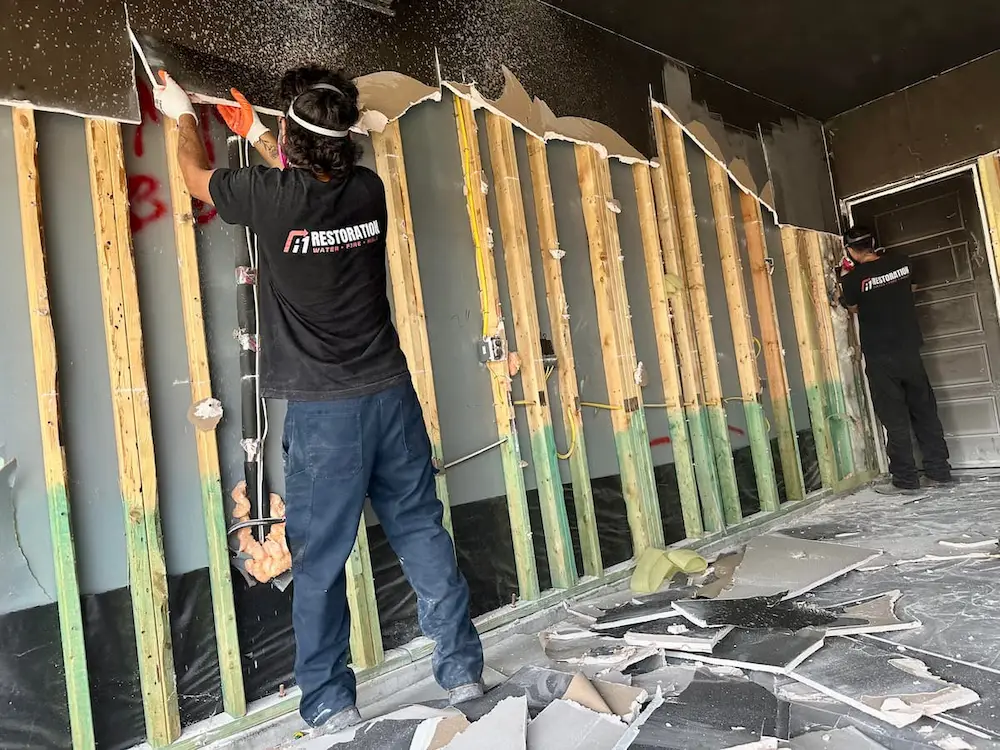
Mopping clears the floor. Mopping a A mop handles the puddle, but brick, plaster, and carpet pad have already absorbed the rest. It climbs brick and plaster walls and spreads under flooring.
In Missouri humidity, wet basement drywall can grow mold in a matter of days. Starting fast keeps more of the original basement.
Many Soulard and Central West End homes still run on 1800s and early-1900s plumbing long past its useful life. The region's severe weather risk also means a tornado-damaged roof, like the one that struck Lambert Airport directly in 2011, is one of the more common ways water finds its way into a home here. We work across St. Louis, Clayton, Florissant, and the rest of the metro.
What a water damage job involves
What the job includes
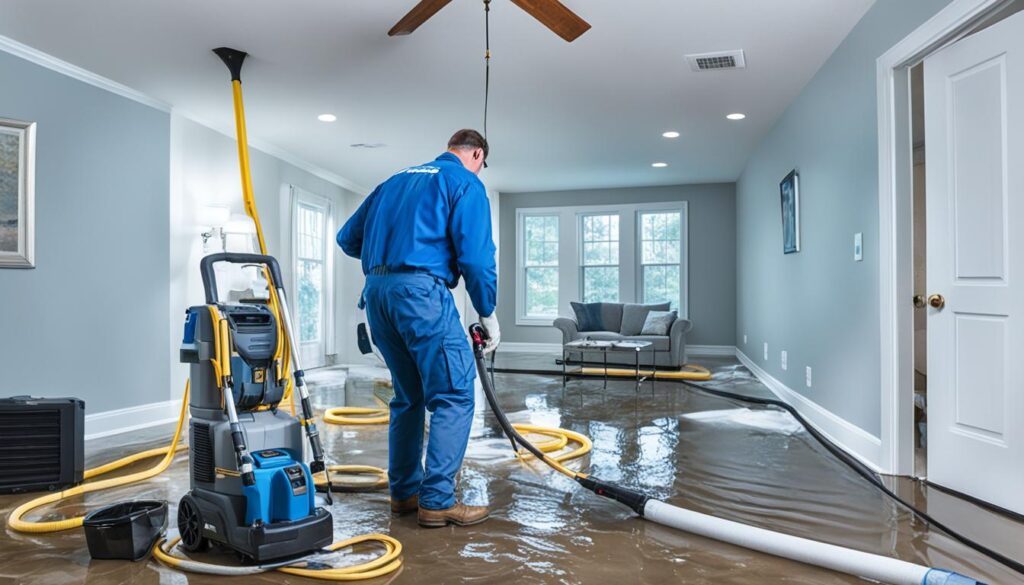
Pumping, moisture mapping, drying equipment, tear-out, disinfecting, and repairs.
How long it takes
A bathroom leak dries in days; a basement flooded by an MSD backup takes longer. Meter readings decide when it's dry. Replacement cabinets, plaster, or flooring stretch the schedule.
What shapes the estimate
Gallons, clean or sewer water, and rebuild size. Nothing starts until you sign the estimate.
Your first visit
Your first site visit and the written estimate cost nothing, from Clayton to Carondelet.
Call 24/7, day or night(417) 262-6233
Right after the leak
First Steps After Water Damage in St. Louis
Once everyone is out of harm's way, work through this list. Water creeping toward the breaker box or a power strip is dangerous; keep your distance. Only touch the breaker box if the floor beneath you is dry.
Not sure what to do first? Call (417) 262-6233 and we will talk you through it. You can call us and your insurance company in either order.
What to do
Shut off the water
Each sink, toilet, and washer has its own shutoff; close the one feeding the leak. If you can't tell where it's coming from, shut the main valve by the water meter in the basement.
Photograph everything
Record the leak and every soaked room on your phone first.
Call your insurance company
Report the loss and keep the claim number with your pictures.
What not to do
Do not use a household vacuum
Regular vacuums aren't built for standing water and can give you a shock.
Do not stand under a wet ceiling
If old plaster above you is bulging, it is holding water and can drop without warning. Leave that room closed until we've looked at it.
Do not touch sewage water
Water rising from a floor drain is sewage and carries bacteria. Keep kids and pets away from it.
Common water damage
Where Water Damage Starts in St. Louis Homes
Most St. Louis water damage starts below grade: sewer backups, seepage through old brick, frozen pipes, and sump pumps that fail in a downpour.
Roof leaks after tornado and hail
Spring hail and tornado winds crack shingles and let the next thunderstorm into the attic.
More about storm damageAging supply lines in historic homes
Galvanized and lead-era pipes in Soulard and Tower Grove homes corrode and leak behind plaster.
Burst and frozen pipes
January arctic air can split lines in exterior brick walls and unheated basements.
Sump pump failures
A pump that loses power during a summer storm lets groundwater fill a finished basement within hours.
Basement flooding from sewer backups
Older neighborhoods on MSD combined sewers can see water push up through floor drains during heavy rain.
Foundation seepage in brick homes
Soft brick and stone foundations wick groundwater into basement walls after long rains.
Mold after a humid-season leak
A leak that sits through a sticky July can turn moldy in days.
More about mold remediation
What we do
How We Get Your Property Dry
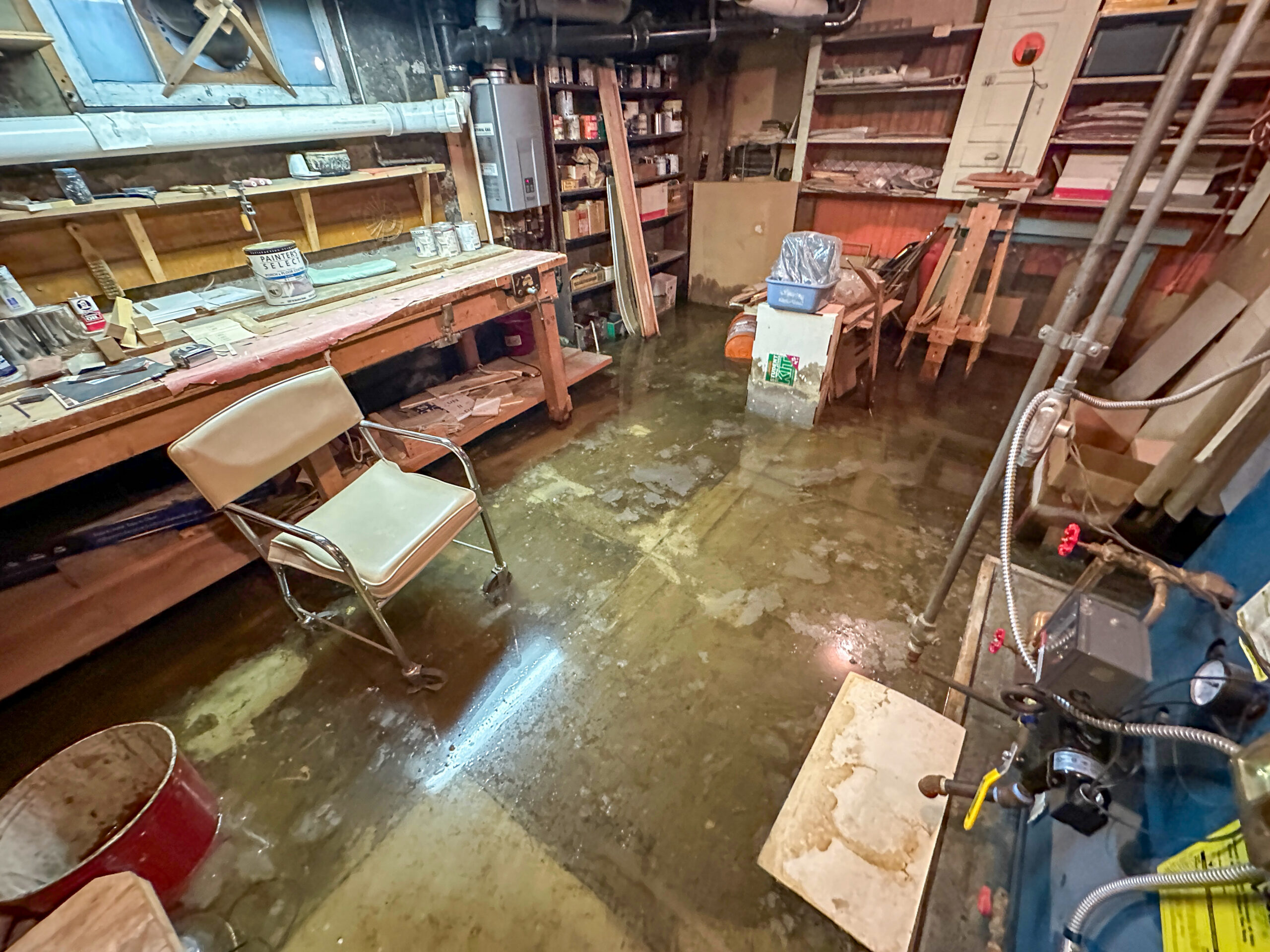
St. Louis is a city of solid brick homes over deep basements, and most water calls start below grade. MSD's combined sewers push water up a floor drain during a downpour, a county sump pump gives out, or a supply line splits in a January cold snap. Our first move is stopping that water.
Next we take readings along the limestone foundation and the basement slab, then up through the plaster that is troweled straight onto brick in a Soulard flounder house or a Tower Grove four-family flat.
Rec room carpet, knotty-pine paneling, and anything the sewer water reached go up the stairs and into the dumpster. Limestone, brick, and the old joists dry where they are.
Mississippi Valley humidity slows things down, so dehumidifiers keep working until each room meets the dry standard, and then the rebuild begins.
Why the water’s source matters
| Source of the water | What it usually means | How we handle it |
|---|---|---|
MSD's combined sewer surcharging in a storm | Sewer water coming up a basement floor drain | Everything porous it touched is bagged, and the floor and lower walls are sanitized. |
A sump pump quitting in a St. Louis County basement | Groundwater across a finished lower level | Water is extracted, wet carpet and paneling are pulled, and drying starts. |
A line freezing against a north-facing brick wall | Water dripping through second-floor plaster | Our tech chips into the plaster at the leak, dries the gap, and leaves the pipe exposed for the plumber. |
Rain seeping through century-old limestone | Wet stone and puddles along the basement wall | The basement is dried, and we mark where the mortar joints are letting water through. |
Hail or a tornado tearing open the roof | Rain soaking the attic floor and plaster ceilings below | We tarp the roof and dry the ceilings and walls under it. |
What can be saved
What We Can Save and What Usually Goes
Solid brick walls, plaster on masonry, and deep basements make St. Louis homes behave differently in a leak, and sewer water changes the outcome most.
- Usually saved
- Depends on the water and timing
- Usually replaced
Limestone foundations and brick basement walls
Usually savedStone and brick get scrubbed, sanitized after a backup, and dried in place.
Plaster troweled directly onto brick
Depends on the water and timingPlaster still bonded to the brick dries out, while hollow-sounding or crumbling areas are redone.
Old-growth joists in a Soulard or Lafayette Square home
Usually savedThe dense lumber dries well and is metered before we close anything up.
Heart pine and oak floors on the main level
Depends on the water and timingPlanks caught early usually lie back down, and badly cupped ones are swapped.
Rec room finishes after an MSD backup
Usually replacedPaneling, drywall, and carpet touched by sewer water are removed.
Furnaces and water heaters in the basement
Depends on the water and timingA technician should inspect them, and units that sat in sewer water are often replaced.
More than water
More Restoration Services From Our St. Louis Team
In St. Louis, a single thunderstorm can back up the sewer, soak the basement, and start mold.
Storm damage
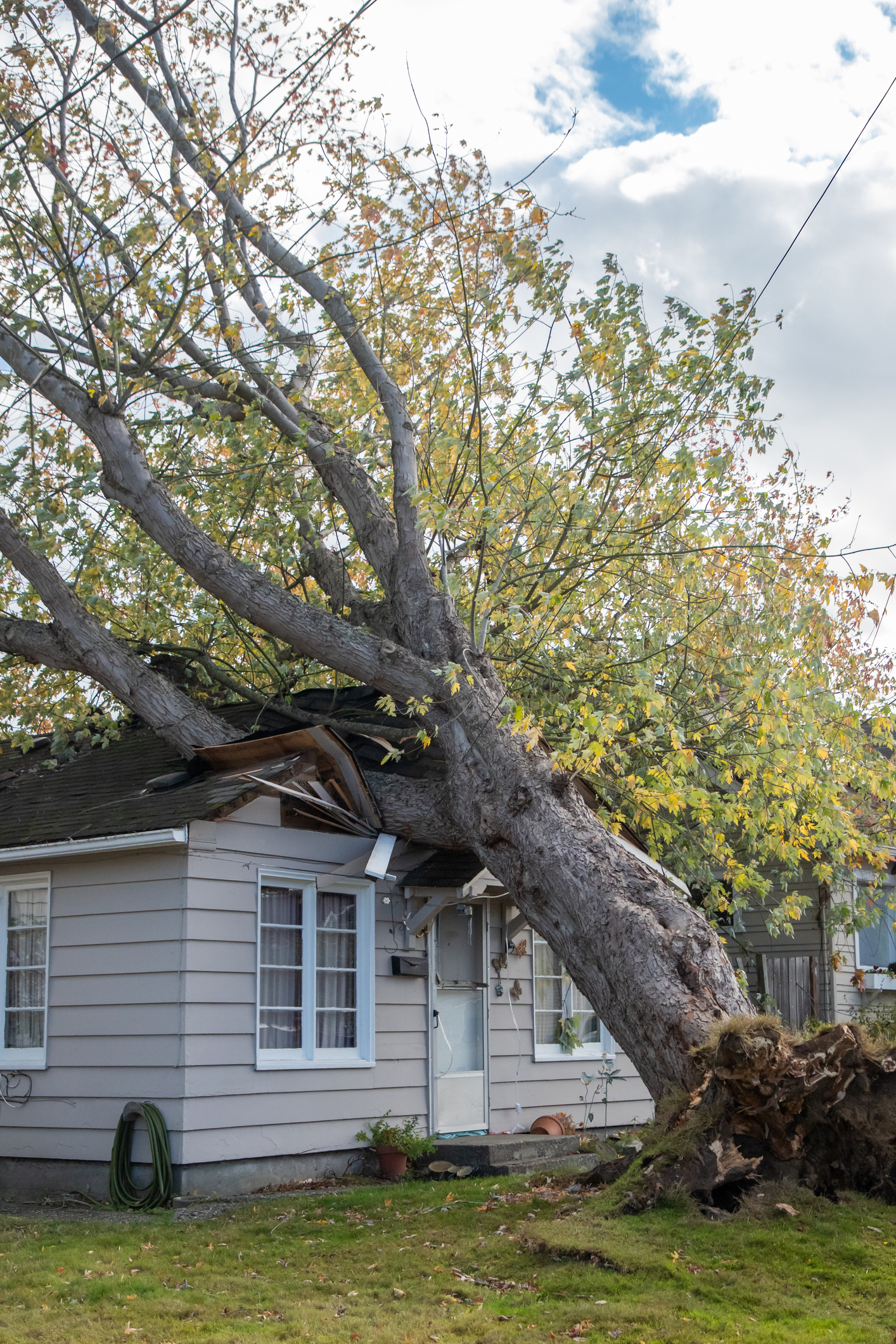
Hail, tornado winds, and falling oaks open St. Louis roofs to the rain. The roof is covered and the rooms underneath rebuilt.
More about storm damage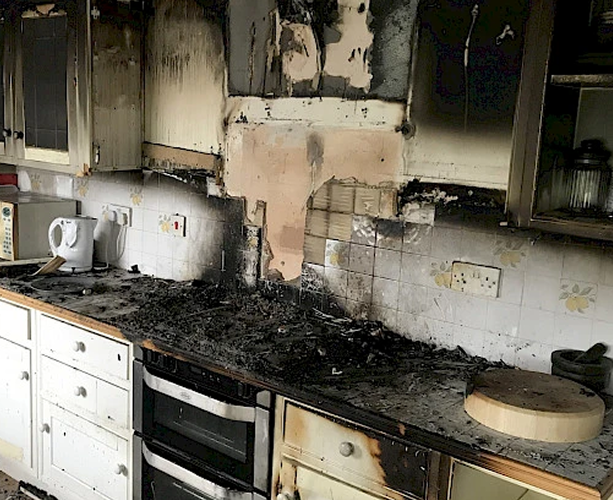
Fire and smoke damage
Kitchen and microwave fires leave soot in every room of a brick flat, and firefighting water ends up downstairs. Soot, odor, and water are all handled before rebuilding.
More about fire damage
Mold remediation
Mold in St. Louis typically starts in brick basements that stayed damp after seepage or an MSD backup, so we dry them and remove the growth.
More about mold remediation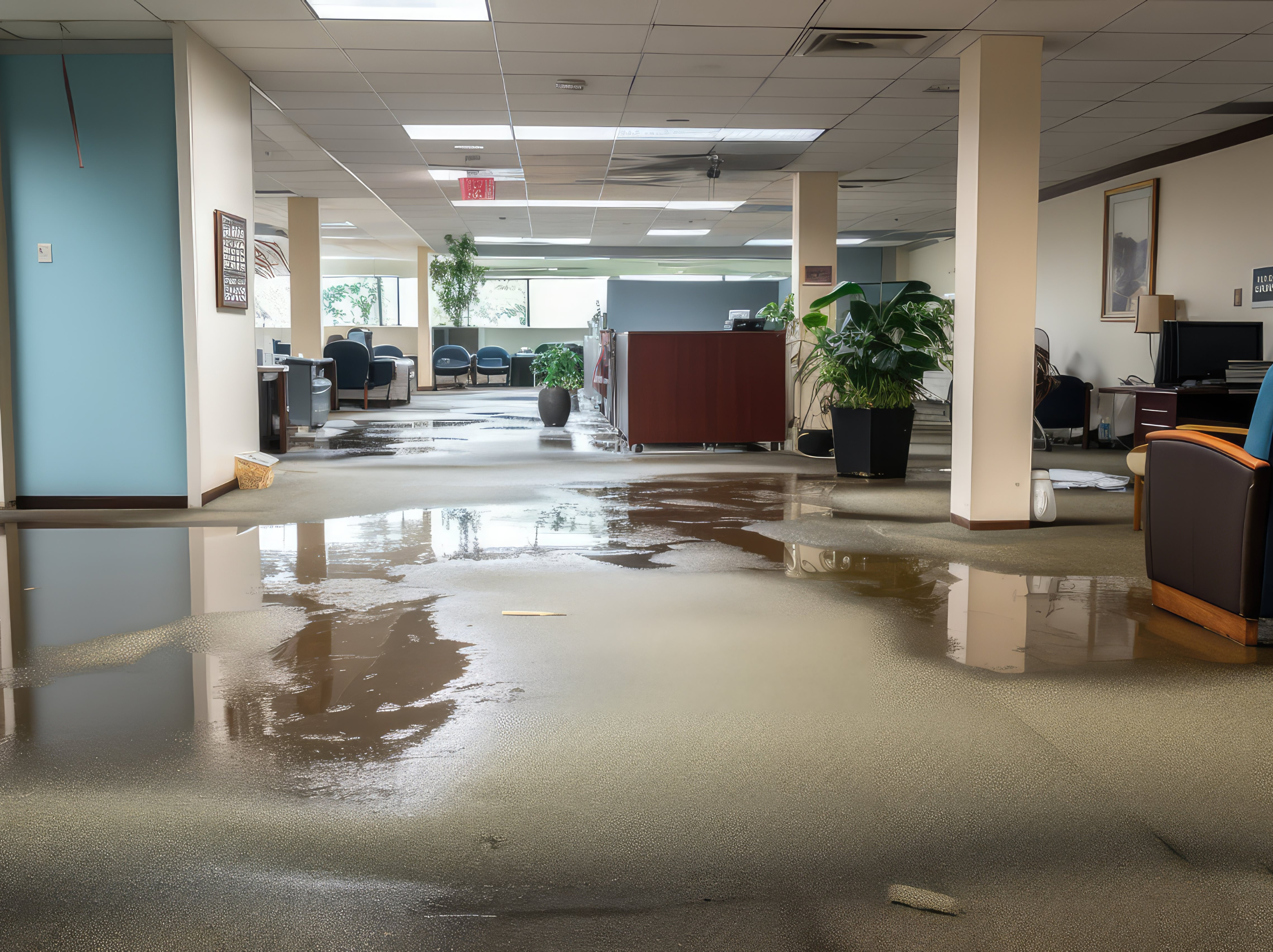
Commercial restoration
In Washington Avenue lofts, water from one unit drips into the next. Drying runs around business hours, and your carrier gets regular updates.
More about commercial restoration
Reconstruction
Our crew rebuilds lime plaster, walnut trim, and finished basements to match the rest of the house.
Ask about repairsWater, mold, or storm: not sure which you're dealing with?
Send our office a phone photo, and a project lead will tell you which service fits.
Call 24/7, day or night(417) 262-6233
Step by step
Our Water Damage Restoration Process in St. Louis
How a St. Louis job runs, from call to walkthrough.
You call, and we stop the water
Dial (417) 262-6233 day or night. We close the valve, cap the broken line, or stop sewage backing up through the floor drain.
We inspect and document
Meters go over soft brick, plaster, and framing, and we photograph every reading for the claim.
We pump out and dry
Water is pumped, ruined drywall and carpet come out, and dehumidifiers fight the Missouri humidity until readings drop.
We restore the basement and review it with you
The basement and rooms are restored, and you walk through each space with our lead.
Water near outlets or the electrical panel?
Leave lamps, extension cords, and outlets near the water untouched. Call our St. Louis office for the next safe step.
Insurance and claims
How Insurance Handles Water Damage in St. Louis
A pipe or supply line that bursts without warning is generally a covered loss under Missouri homeowners policies. Sewer backup usually needs an added endorsement, and outside flooding needs flood insurance. Coverage depends on your policy.

What your adjuster will want
- The date and whether an MSD backup, a sump failure, a frozen line, or a storm caused the water
- Phone pictures of the floor drain, the basement, and every wet room
- Soaked belongings brought up from the basement and kept for the adjuster
- Receipts from the plumber, sump repair, and any nights in a hotel
What we send them
- Snapshots of the floor drain or sump pit and every flooded room
- Moisture numbers for the stone, the slab, and the plaster upstairs
- A St. Louis estimate listing each drying and repair item
- A short report keeping sewer backup separate from a burst pipe, since policies often treat them differently
Where Our St. Louis Team Works
We serve St. Louis and nearby communities in St. Louis County and Jefferson County, including those listed below.
Up to 45 miles around St. Louis
Not sure if you're in range? Call (417) 262-6233 and ask.
Including
- Arnold
- Fenton
- Florissant
- Chesterfield
Nearby locations
Looking for a Different Location?
On the wrong page, or is another location closer to you? Here are our nearest locations.
Kansas City, MO
View water damage servicesNashville, TN
View water damage servicesChicago, IL
View water damage services
How fast can you get to me?
We can be at your door within 40 minutes. Call (417) 262-6233 and give us your address.
Will a Missouri homeowners policy pay for water damage?
A sudden pipe or supply line break generally is covered.
Why do St. Louis basements back up during heavy rain?
Much of the older city drains through MSD combined sewers that carry rain and sewage in the same pipe. During a cloudburst they fill fast, and the overflow pushes up through basement floor drains. A backwater valve can help.
Can box fans dry out a St. Louis basement?
Not on their own. Not alone. Brick, plaster, and concrete hold water, so in July humidity it takes dehumidifiers and meter checks.
Do older brick homes in St. Louis leak through the foundation?
They can. Limestone and soft brick foundations from the 1800s let groundwater in after long rains, especially where the mortar has crumbled. Grading and downspouts that move water away help.
What should I do when a pipe freezes in a January cold snap?
If it hasn't cracked, open the tap a little and warm the line slowly with a hair dryer. If water is spraying, close the main where it enters the basement and call our office.
Can the furnace run after the basement flooded?
Have a gas technician check it first; flooded controls or burners are a real hazard.
What does water damage repair cost in St. Louis?
It depends on how much water, whether it came from the sewer, and the rebuild. Request a written estimate below and we will copy your adjuster.
Can we live upstairs while the basement dries?
Usually, if the water stayed downstairs. Sewage downstairs, no heat, or no power usually means a short stay elsewhere.
Day or night
Water in Your St. Louis Home or Business?
Call (417) 262-6233, 24/7, day or night. We can be at your door within 40 minutes.
Call 24/7, day or night(417) 262-6233Or ask for a free inspection online
Leave your name and number, and a St. Louis project manager will call.
Need help now? Call (417) 262-6233