
24/7, day or night Greater St. Louis
Fire and Smoke Damage Restoration in St. Louis, MO
In St. Louis, a microwave fire, knob-and-tube wiring in a Benton Park flat, or lightning during a spring storm can fill a brick home with smoke in minutes. A1 Restoration restores St. Louis homes after a Tower Grove microwave fire or smoke creeping through a Soulard party wall.
Free inspectionCall 24/7Tap to call · Free inspection(417) 262-6233Whether you're in Dogtown or Dutchtown, a live dispatcher answers 24 hours a day. We can be at your door within 40 minutes.
Free inspections and estimates
 IICRC Certified Firm

“Five stars aren’t enough!… I called him in a panic after a very quick Google search, and he showed up, knew exactly what to do, and took care of business.”“…he showed up, knew exactly what to do, and took care of business.”










Why speed matters
Why Fire Damage Keeps Spreading in St. Louis Homes
Putting out the fire stops the flames. After St. Louis Fire leaves, soot, odor, and hose water go on damaging plaster and woodwork.
Acidic soot discolors lime plaster and old walnut trim, and in a muggy Missouri summer the smell settles deep into fabric. The faster soot is removed, the more original plaster and millwork survive.
Soulard and The Hill are full of 1800s brick homes, and many still hide knob-and-tube wiring older than air conditioning. Spring and summer storms here bring plenty of lightning along with tornado watches. We work across St. Louis, Clayton, Florissant, and the rest of the metro.
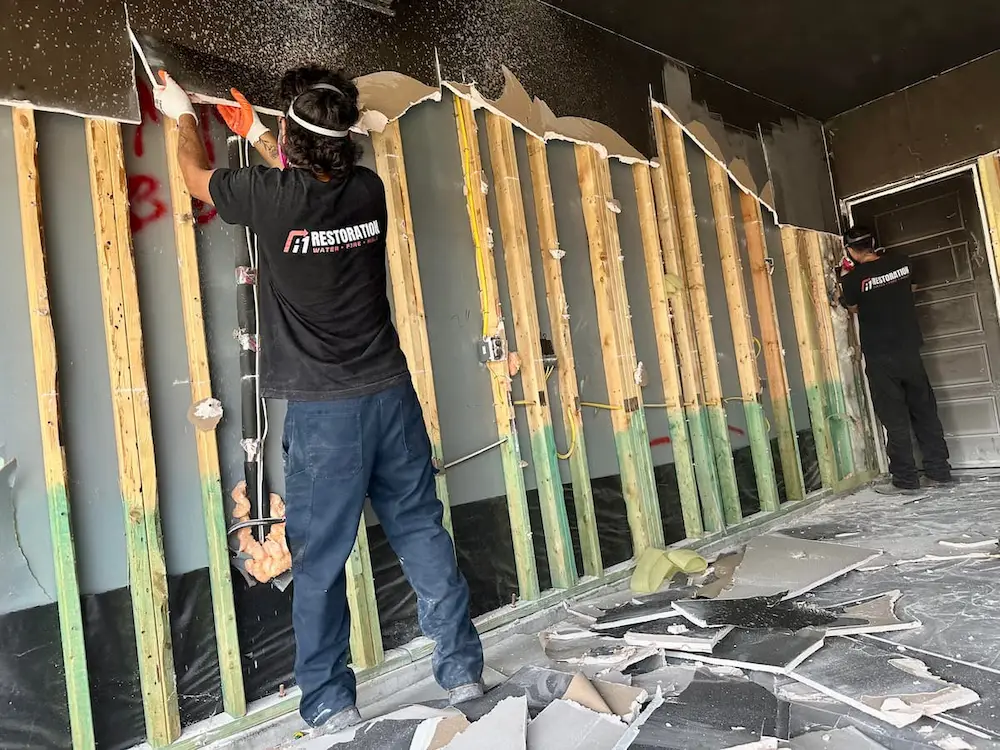
What a fire damage job involves
What the job includes
Securing openings, washing soot off plaster and contents, deodorizing, and rebuilding the burned rooms.
How long it takes
One kitchen is days; smoke through all three floors of a brick flat is weeks. No room is finished until it passes an odor test. Replacement cabinets, plaster, or flooring stretch the schedule.
What shapes the estimate
Area burned, how far smoke traveled, and the rebuild. Nothing starts until you sign the estimate.
Your first visit
Your first site visit and the written estimate cost nothing, from Clayton to Carondelet.
Call 24/7, day or night(417) 262-6233
Right after the fire
First Steps After a Fire in St. Louis
Once firefighters say you can go back in, start with these steps. Keep out of rooms with loose wiring or bowed plaster until we've inspected them.
Not sure what to do first? Call (417) 262-6233 and we will talk you through it. You can call us and your insurance company in either order.
What to do
Wait for the all clear
Wait for St. Louis Fire to say the house is safe.
Photograph everything
Video each room, the basement, and the outside before cleanup.
Call your insurance company
Report the loss and keep the claim number with your pictures.
What not to do
Do not turn on the power
Have an electrician test every circuit before Ameren reconnects power, including rooms the fire missed.
Hold off on the kitchen
Throw out food exposed to heat or smoke, and leave appliances unplugged until inspected.
Don't wipe the soot
Wiping grinds oily soot into plaster and woodwork.
Common fire damage
How House Fires Start in St. Louis
St. Louis house fires usually begin in the kitchen, in old wiring, at the furnace, or in a dryer vent, and in shared brick buildings smoke rarely stays in one unit.
Kitchen fires
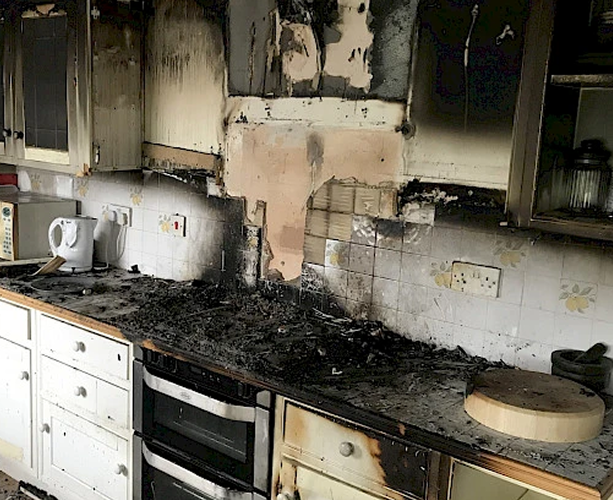
Stovetop and microwave fires are a leading cause, and burning grease climbs cabinets fast.
More about water damage restorationElectrical fires in historic homes
Knob-and-tube and early wiring in 1880s-1920s brick homes can overheat under today’s loads.
Fires in shared multi-unit buildings
In two-family flats and rowhouses, smoke moves through shared walls, chases, and attics into the next unit.
Dryer fires
A dryer vent snaking across a basement ceiling can clog with lint and ignite.
HVAC and furnace fires
Older furnaces running hard through a Missouri winter can overheat when parts wear out.
Water from firefighting
Firefighting water runs through floors to the basement, soaking plaster on the way.
Mold after a fire
In a muggy Missouri summer, hose-soaked plaster and basements can sprout mold within days.
More about mold remediation
What we do
How We Clean Up Fire and Smoke Damage
Once firefighters are done with the brick house, we plywood the window openings, tarp the roof, and wait for an electrician's okay before Ameren restores service.
Smoke in a four-family flat or a row of attached brick houses moves through the shared stair, the party walls, and the old gravity ductwork, so we test every unit and the basement.
Charred joists, batts full of soot, and plaster the heat knocked off the brick are removed. Brick, glazed tile, and walnut or oak trim with only a film are hand-washed.
We treat the odor in every flat of the building until it is gone, and fire hose water is cleared from the cellar during our first visit.
Why the cause of the fire matters
| What started the fire | What it usually means | How we handle it |
|---|---|---|
A grease fire in a four-family flat | Smoke rolling up the back stairs into the other units | The kitchen and stairwell are degreased, and the other flats are deodorized. |
Knob-and-tube wiring in a historic brick home | Heat damage inside plaster laid on brick | We open the plaster along the circuit and replace charred furring and framing. |
A fire in the brick house that shares your wall | Smoke and hose water seeping through the common wall | We inspect your side of the wall separately and give your insurer its own report. |
An old gravity furnace overheating | Soot in the basement and smoke blown out every register | We clean the basement and the duct runs so the smell does not come back each winter. |
Water from the engine company | A basement flooded beneath the burned rooms | Our crew pumps out the basement, tears out wet rec room finishes, and starts drying. |
What can be saved
What We Can Save After a Fire
Red brick, tile, and solid walnut or oak usually come through a fire in a St. Louis home, while upholstery near the flames usually does not, and attached houses mean the neighbors get checked too.
- Usually saved
- Depends on the smoke and the heat
- Usually replaced
Interior and exterior brick
Usually savedSoot comes off St. Louis red brick with a masonry detergent and soft brushing.
Walnut and oak woodwork
Depends on the smoke and the heatLight soot sands away, and burned pieces are copied by a millwork shop.
Plaster on brick walls upstairs
Depends on the smoke and the heatPlaster with a smoke film is washed and sealed, and plaster the heat loosened is redone.
Heart pine floors in older flats
Depends on the smoke and the heatHeart pine with only a haze is buffed, and boards that buckled from heat or water are swapped for salvaged ones.
Mattresses, sofas, and window treatments
Depends on the smoke and the heatPieces the smoke only passed through often clean up, while anything scorched goes.
Batts in the attic over the fire
Usually replacedSmoke settles into the fibers, so the insulation over the burned rooms is removed and replaced.
More than smoke
More Restoration Services From Our St. Louis Team
After a St. Louis fire, smoke in the shared walls and water in the basement keep causing damage.
Storm damage
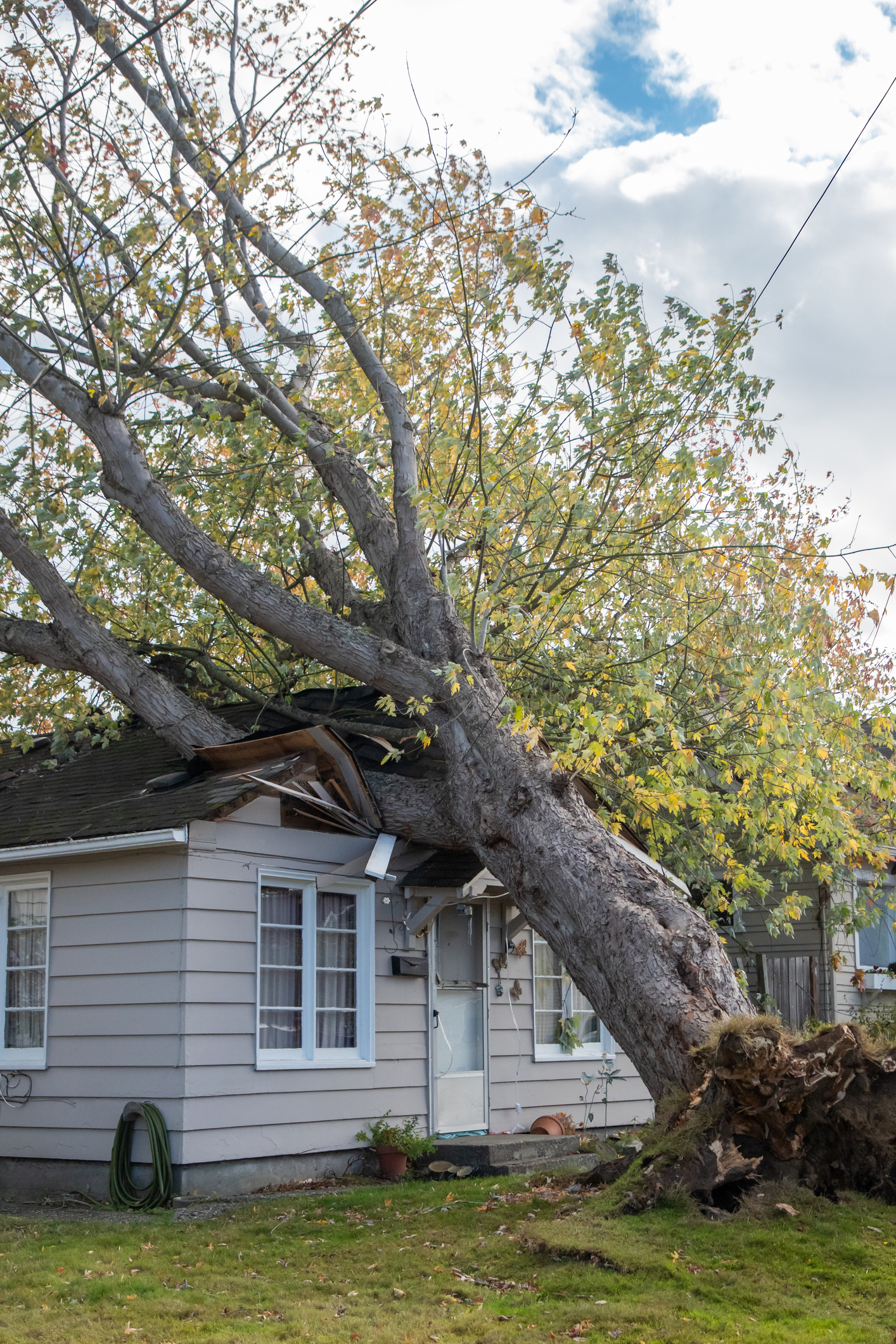
Tornado winds and hail breach roofs much like a fire. The opening is covered and the rooms below rebuilt.
More about storm damage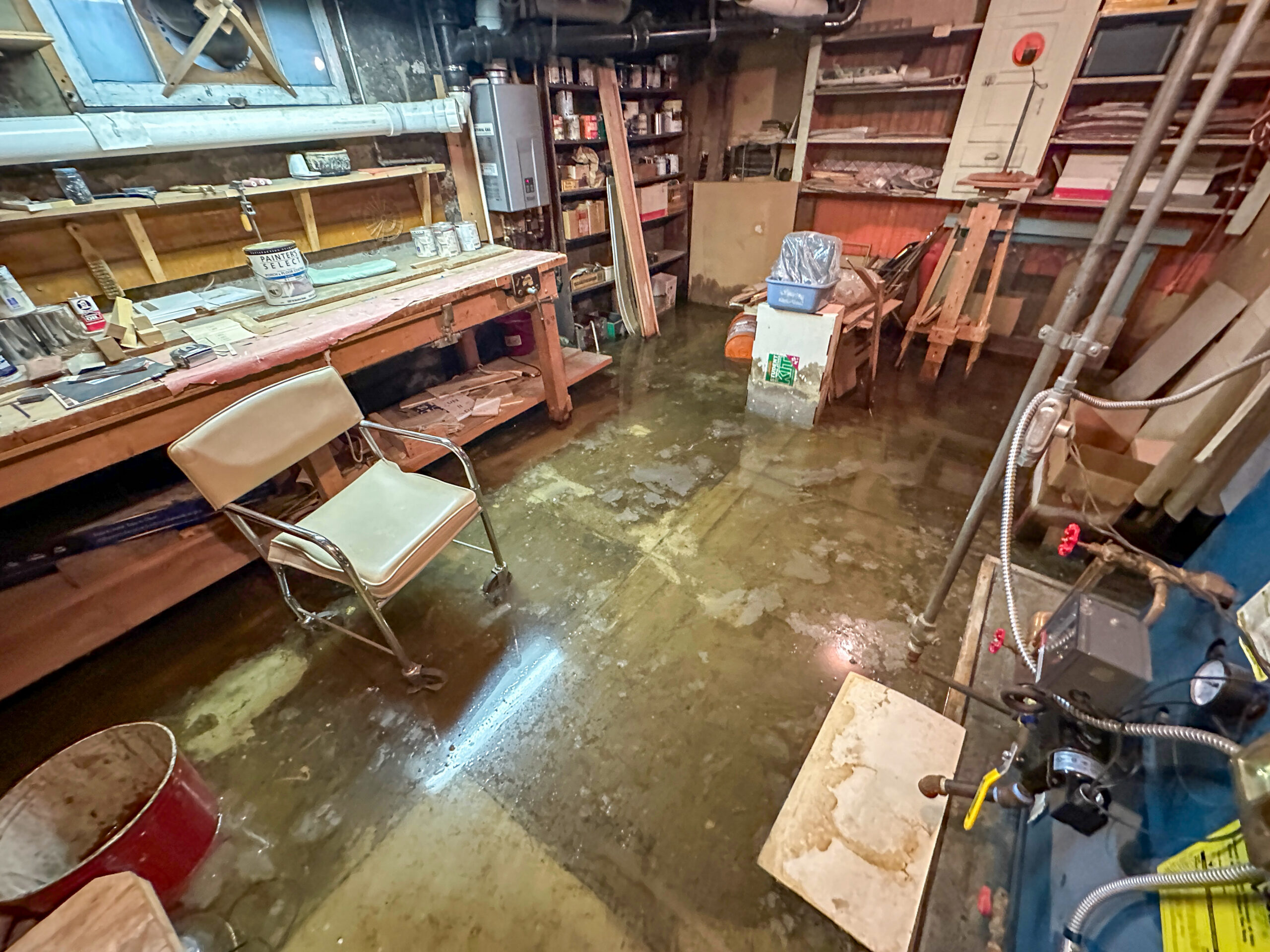
Water damage
Hose water runs to the basement and into the plaster. We pump the basement and dry the house.
More about water damage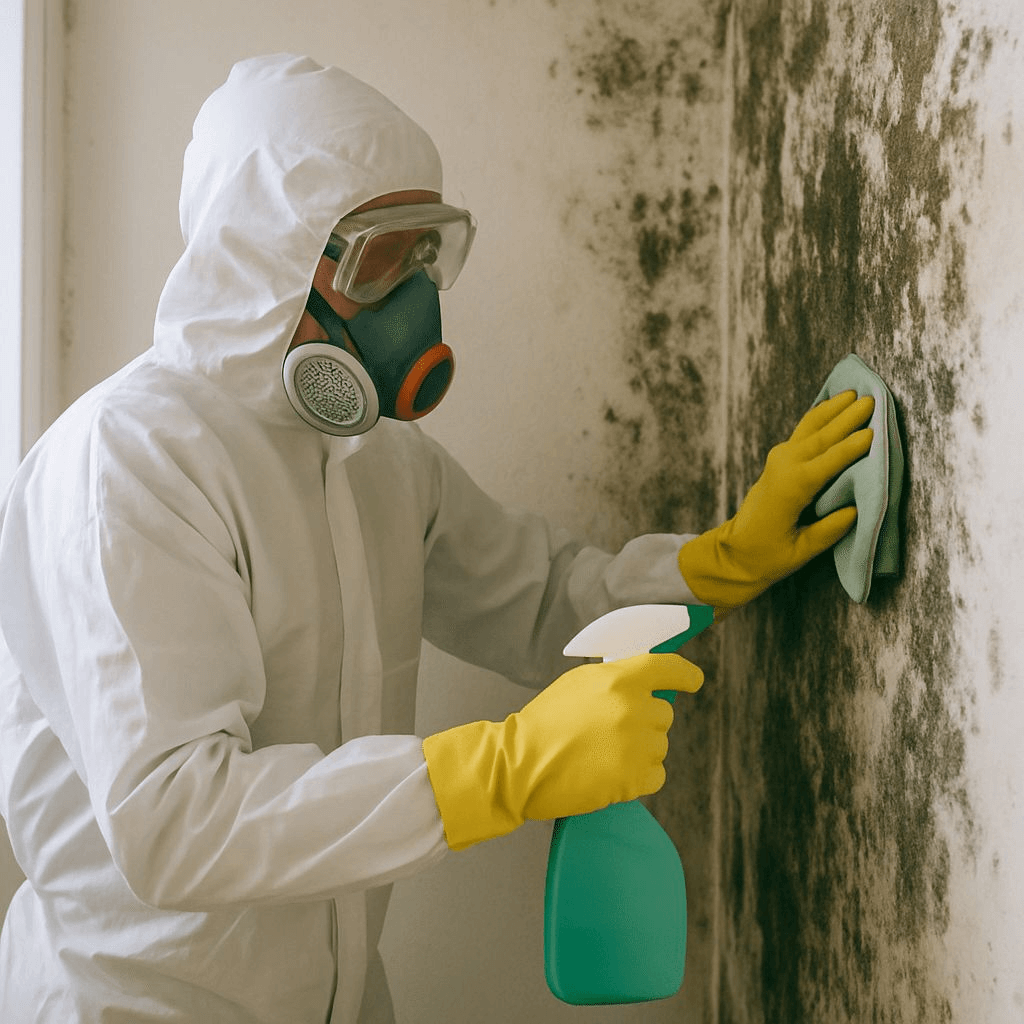
Mold remediation
Plaster and basements soaked during firefighting can grow mold. We find the damp and remove the growth.
More about mold remediation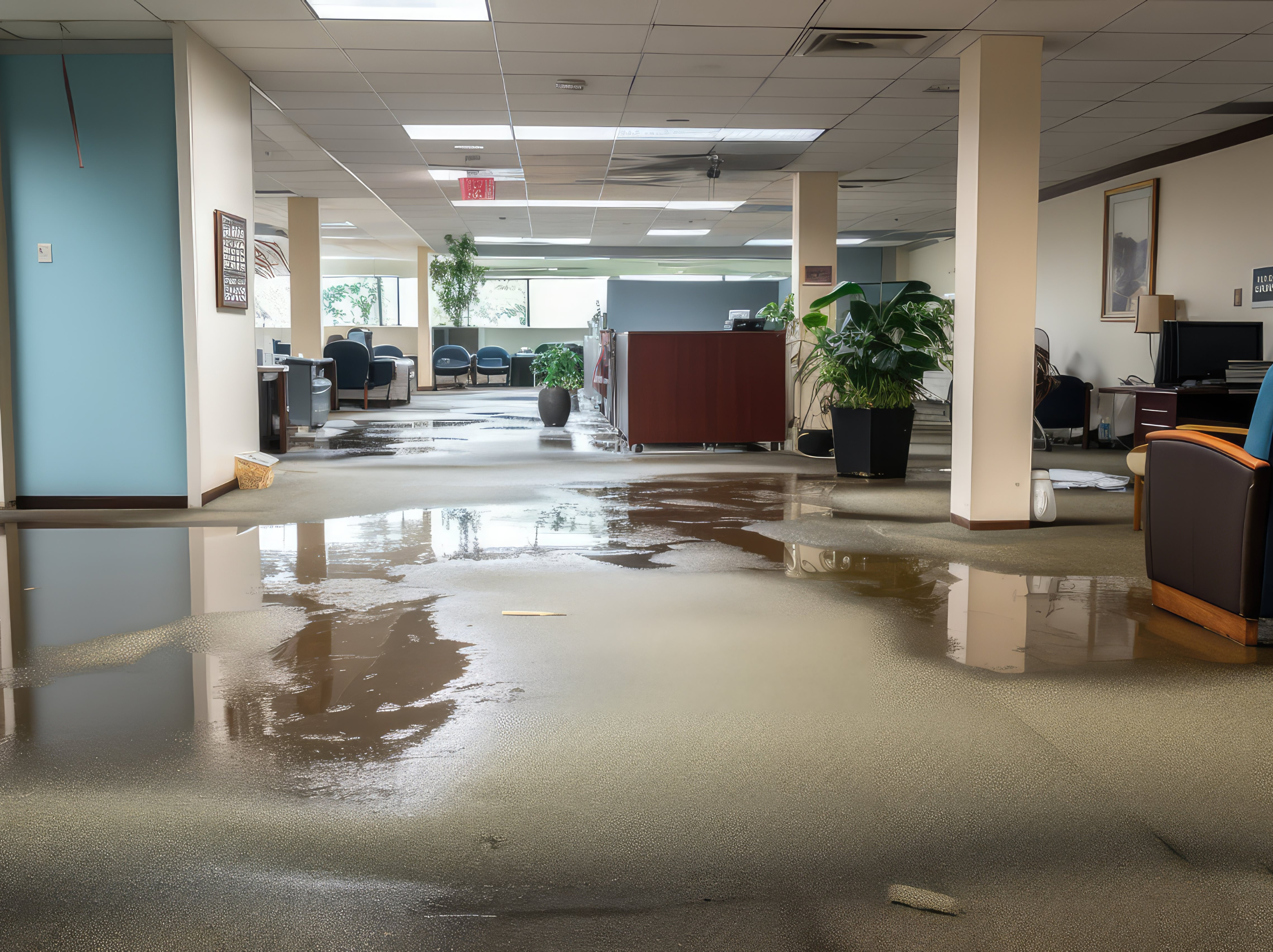
Commercial restoration
Soulard bars and Washington Avenue shops share brick walls and ducts, so smoke travels. Work is scheduled around business hours, with documentation sent to your carrier.
More about commercial restoration
Reconstruction
After deodorizing, fire-damaged rooms get new plaster and trim that match the rest of the house. One crew handles both.
Ask about repairsWater, mold, or storm: not sure which you're dealing with?
Send our office a phone photo, and a project lead will tell you which service fits.
Call 24/7, day or night(417) 262-6233
Step by step
Our Fire and Smoke Damage Restoration Process in St. Louis
How a St. Louis job runs, from call to walkthrough.
You call, and we secure the building
Dial (417) 262-6233 day or night. Broken windows get plywood, and a tarp covers any hole the fire made in the roof.
We inspect and document
We map how smoke moved through each room, the attic, and any party wall shared with a neighboring flat.
We remove the soot, smell, and water
Plaster and woodwork are cleaned of soot, the smell is neutralized, and hose water is pumped out of the basement.
We rebuild and walk through it with you
After rebuilding and painting, we do an odor check of every room together.
Smell gas, or see exposed wiring?
Step outside and leave switches alone. Call our St. Louis office for the next safe step.
Insurance and claims
How Insurance Handles Fire Damage in St. Louis
Missouri homeowners policies typically pay for an accidental fire and its smoke, even smoke that drifted in from the flat next door. Neglect often is not. Coverage depends on your policy.
What your adjuster will want
- The official fire report with the date and the cause investigators found
- Pictures of each unit, the shared stairs, and the basement
- Clothes and furniture with smoke damage, kept for the claim
- What you spent on boarding up, lodging, and food during the displacement
What we send them
- Photos of each unit and stairwell the smoke reached
- Odor and soot readings for every room
- Line items for soot removal and rebuilding in each unit
- Replies to each owner's insurer when a fire crosses a shared brick wall
Where Our St. Louis Team Works
We serve St. Louis and nearby communities in St. Louis County and Jefferson County, including those listed below.
Up to 45 miles around St. Louis
Not sure if you're in range? Call (417) 262-6233 and ask.
Including
- Arnold
- Fenton
- Florissant
- Chesterfield
Nearby locations
Looking for a Different Location?
On the wrong page, or is another location closer to you? Here are our nearest locations.
Kansas City, MO
View fire and smoke damage servicesNashville, TN
View fire and smoke damage servicesChicago, IL
View fire and smoke damage services
Questions we hear
St. Louis Fire and Smoke Damage Restoration FAQs
Still have a question? Call (417) 262-6233
How fast can you get to me?
We can be at your door within 40 minutes. Call (417) 262-6233 and give us your address.
Will a Missouri homeowners policy pay for fire and smoke damage?
An accidental fire and its smoke generally are covered, including smoke that came from a neighboring unit. Neglect often is not.
When is it safe to go back into our brick home after a fire?
When St. Louis Fire releases the house. Rooms with exposed wiring or a drooping plaster ceiling stay closed until we inspect them.
Can you get smoke odor out of old plaster and walnut trim?
In most homes, yes. In most homes, yes. Plaster, woodwork, and belongings are cleaned, and HEPA air scrubbers run until the odor is gone. Items beside the flames may be lost.
Can I run the furnace after a fire?
Not until it is checked. Not yet. Soot inside the ducts spreads the smell everywhere, and the fire's heat may have damaged the unit. A heating technician should inspect it first.
Is the wiring in my 1890s brick house a fire risk?
Yes. It can be. Knob-and-tube from that era was never meant for window units, microwaves, and space heaters. Flickering lights or a breaker that keeps tripping means it's time for an electrician.
Can you help a St. Louis restaurant or shop after a fire?
Yes. We assess the loss with ownership, then handle cleanup and the rebuild needed to reopen.
What does fire restoration cost in St. Louis?
What burned, how far smoke spread, and the rebuild set the price. Request a written estimate below and we will copy your adjuster.
Can we stay home during the work?
Sometimes, in rooms the smoke missed. If the furnace is off in January or smoke lingers, stay elsewhere for a few nights.
Day or night
Fire or Smoke Damage at Your St. Louis Home?
Call (417) 262-6233, 24/7, day or night. We can be at your door within 40 minutes.
Call 24/7, day or night(417) 262-6233Or ask for a free inspection online
Leave your name and number, and a St. Louis project manager will call.
Need help now? Call (417) 262-6233