
24/7, day or night Greater Chicago
Water Damage Restoration in Chicago, IL
A burst pipe, a sewer backup through a floor drain, or a flooded basement after a heavy storm can hit a Chicago home fast. From a basement full of storm water to the plaster upstairs, A1 Restoration handles water damage restoration across Chicago.
Free inspectionCall 24/7Tap to call · Free inspection(773) 839-9204Ring us at 3 a.m. or on a holiday weekend and a real person in our Chicago shop answers. We can be at your door within 40 minutes.
Free inspections and estimates
 IICRC Certified Firm

“Can’t believe how easy it was having these guys come out, I thought the process would be stressful but the crew made light work of what I had, truly amazing!”“Can’t believe how easy it was having these guys come out…”










Why speed matters
Why Water Keeps Moving Through a Chicago House
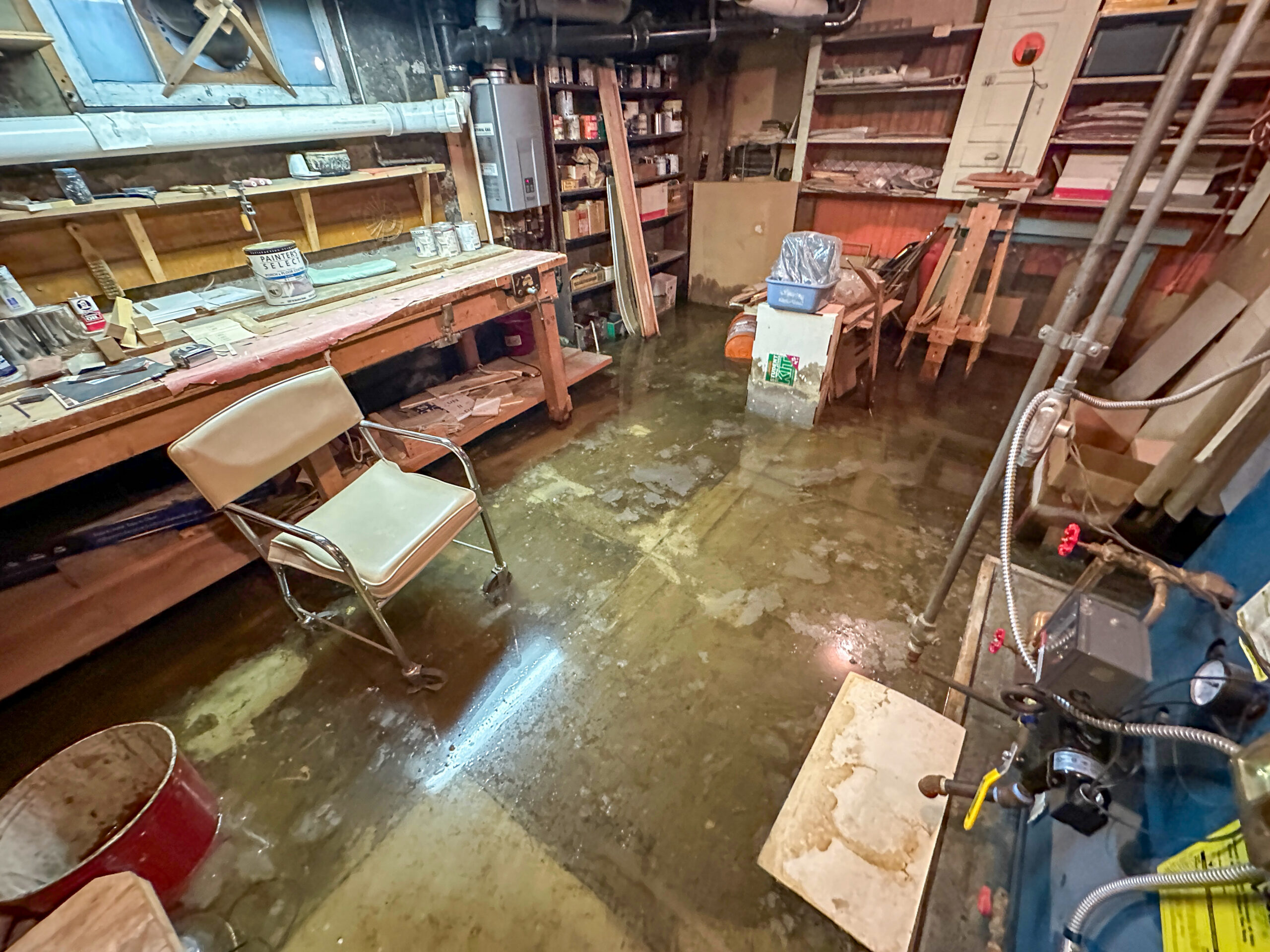
Mopping clears the floor. Mopping cannot reach the water already in the drywall, baseboards, and subfloor. It wicks up basement walls and under flooring where nobody looks.
Wet framing and paneling in a humid basement can start growing mold within days. Fast drying keeps more of the basement intact.
Much of Chicago's sewer system was built more than a century ago as a combined system, carrying stormwater and sewage in the same pipes. When heavy rain overwhelms that system, water has nowhere to go but back up through basement floor drains, something the city's own water management department fields hundreds of calls about during a single bad storm. Older neighborhoods with this legacy infrastructure, often on the South and West sides, see this most. We work across Chicago and throughout Cook County.
What a water damage job involves
What the job includes
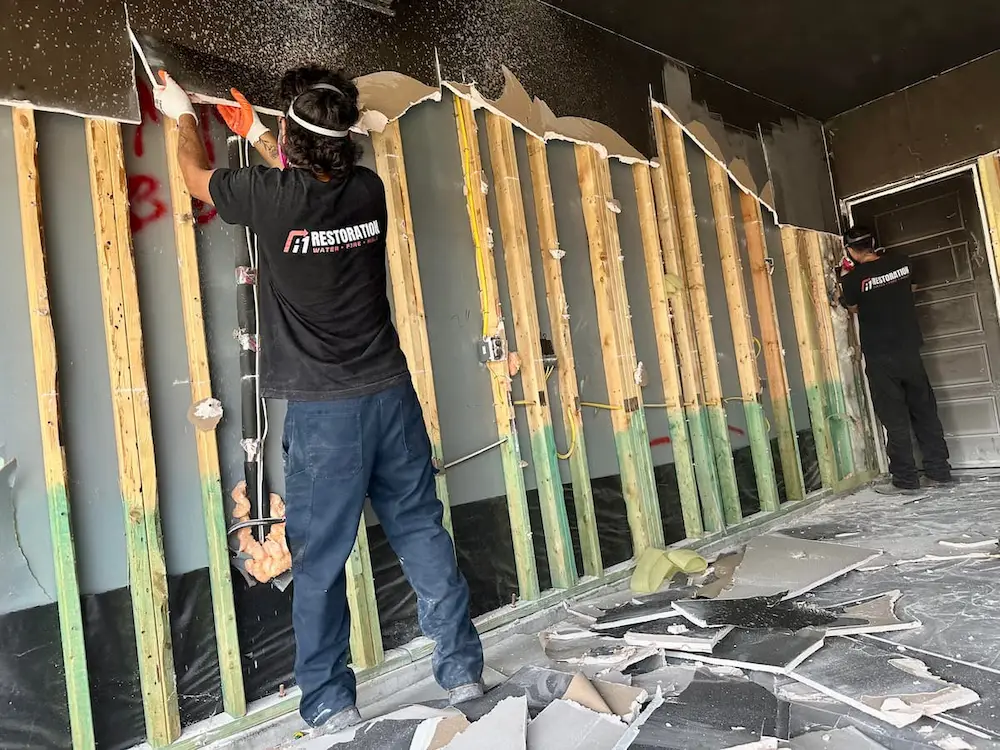
Pumping, moisture checks, dehumidifiers and fans, tear-out, disinfecting, and repairs.
How long it takes
A wet bath is a few days; a finished basement full of water is longer. The meter, not the look of the wall, decides when it is dry. Replacing plaster, flooring, or cabinets adds time.
What shapes the estimate
Volume of water, clean or sewage, and the rebuild. Nothing begins until you have approved the price.
Your first visit
Every job starts with a free look and a written number.
Call 24/7, day or night(773) 839-9204
Right after the leak
First Steps After Water Damage in Chicago
Once your family is out of harm's way, work through this. Water touching an outlet or the panel is a shock risk; stay clear. Only flip a breaker from dry ground.
Not sure what to do first? Call (773) 839-9204 and we will talk you through it. You can call us and your insurance company in either order.
What to do
Shut off the water
Close the valve at the sink, toilet, or washer if it is leaking. Can't find it? Close the main valve, usually on the basement wall by the meter.
Photograph everything
Your phone camera is the first tool: shoot the source and every wet room.
Call your insurance company
Get the carrier on the phone and jot the claim number on the fridge.
What not to do
Do not use a household vacuum
A regular vacuum and standing water are a shock hazard.
Do not stand under a wet ceiling
A sagging, swollen ceiling can fall without warning. Keep that room closed until we inspect it.
Do not touch sewage water
Water coming up through a basement floor drain carries sewage bacteria. Keep kids and pets away from it.
Common water damage
Where Water Damage Starts in Chicago Homes
In Chicago, water damage usually starts below grade: a floor drain, a foundation crack, or a frozen pipe in the basement.
Combined sewer backups
During a heavy storm, the combined sewer can fill and push dirty water back up through the basement floor drain.
Frozen and burst pipes
A January cold snap can freeze a line along an outside wall or in an unheated porch and split it.
Basement window wells and foundation cracks
Window wells fill in a downpour, and older foundations let water seep through cracks and mortar joints.
Appliance and supply-line leaks
A washer hose, water heater, or ice maker line in the basement can leak for days before anyone goes downstairs.
Ice dams and gutter failures
Ice at the roof edge backs meltwater under the shingles and into the ceilings below.
More about storm damageOverland flooding near the river
Low-lying blocks near the Chicago River and its branches can take on water when storms overwhelm drainage.
Mold after a basement flood
Paneling, carpet, and framing left damp after a flood can grow mold within days.
More about mold remediation
What we do
How We Get Your Property Dry
On a Chicago call the water is usually coming from below or from the cold: sewer water rising through a bungalow floor drain, a pipe that split in a January cold snap, or seepage through a window well.
Our moisture check covers the basement first, along the block walls, under the carpet, and behind finished paneling, and then climbs to plaster walls and floors on the levels above.
Carpet and pad from a backup, the bottom of finished basement walls, and anything sewage touched are hauled up the stairs and out. Sound framing, block, and vintage trim are dried in place.
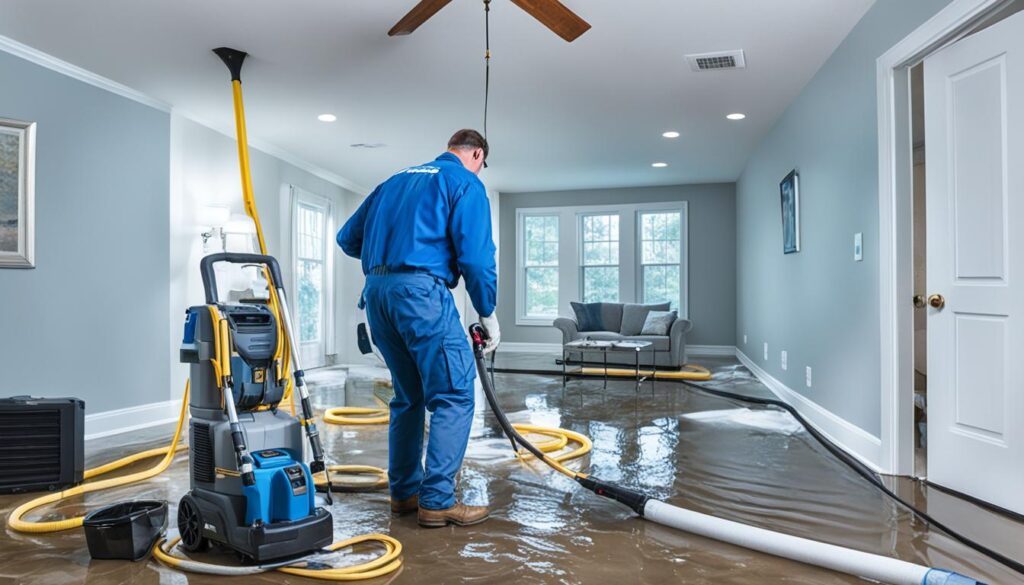
Dehumidifiers and air movers run until the basement reads like a dry one. In a two-flat or three-flat, every unit the water reached is cleared before repairs begin.
Why the water’s source matters
| Source of the water | What it usually means | How we handle it |
|---|---|---|
Rain pushing sewer water up a basement floor drain | Contaminated water across the basement floor | Treated as sewage, with porous finishes removed and the floor disinfected. |
A pipe that froze along an outside wall | Clean water leaking into plaster or a basement ceiling | The wall or ceiling is opened, dried, and the line is left ready for the plumber. |
A window well filling in a downpour | Water pouring through a basement window | We pump the basement, cut away soaked drywall and carpet on the window-well side, and dry the rest. |
A washer or water heater in the basement | Clean water spread across the floor | Extracted quickly, with carpet pad replaced and walls checked. |
An ice dam on a bungalow roof | Meltwater through upstairs ceilings and plaster | Ceilings dried or cut out, and a roofer deals with the ice dam itself. |
What can be saved
What We Can Save and What Usually Goes
A Chicago basement backup and a burst pipe upstairs lead to different results, since sewer water changes what can stay. Our walkthrough tells you which items in your home are kept.
- Usually saved
- Depends on the water and timing
- Usually replaced
Poured or block basement walls
Usually savedConcrete and block are cleaned, disinfected, and dried, then stay.
Vintage oak trim in bungalows and two-flats
Usually savedSolid trim that took water usually dries and can be refinished.
Plaster upstairs
Depends on the water and timingIf the plaster under a burst pipe stays hard, it dries where it hangs. Sagging plaster under a burst pipe is replaced.
Finished basement paneling and drywall
Depends on the water and timingClean water dried quickly may leave it. Sewer water means it comes out.
Basement carpet and pad after a backup
Usually replacedSewage soaks them through, so both are replaced.
Boxes and soft goods stored on the floor
Depends on the water and timingHard items clean up. Cardboard and fabric touched by a backup are usually discarded.
More than water
More Restoration Services From Our Chicago Team
In Chicago, a flooded basement often brings mold, and a winter storm can bring ice-dam leaks.
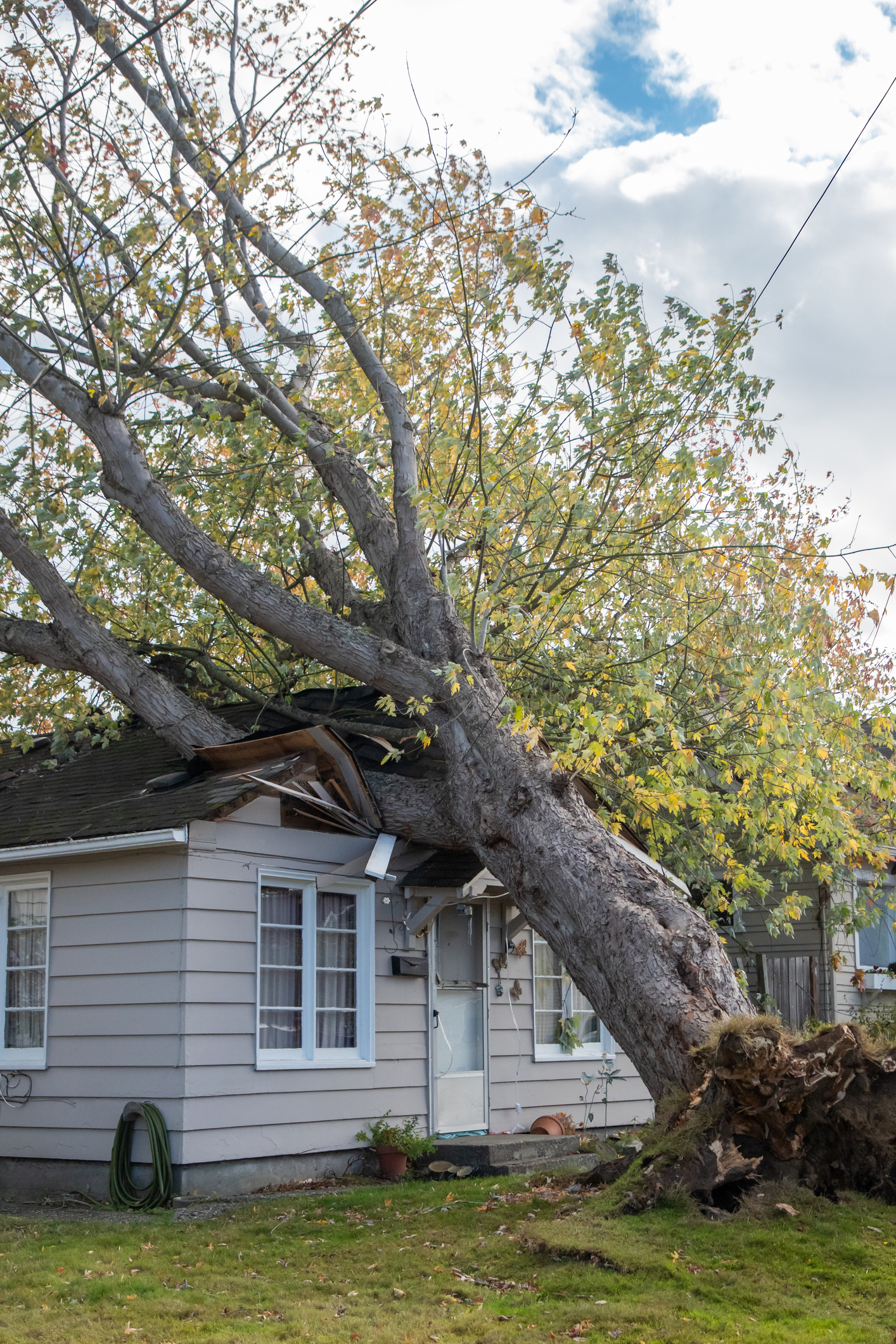
Storm damage
Lakefront wind, hail, or an ice dam can open a roof. We cover it and rebuild the rooms below.
More about storm damage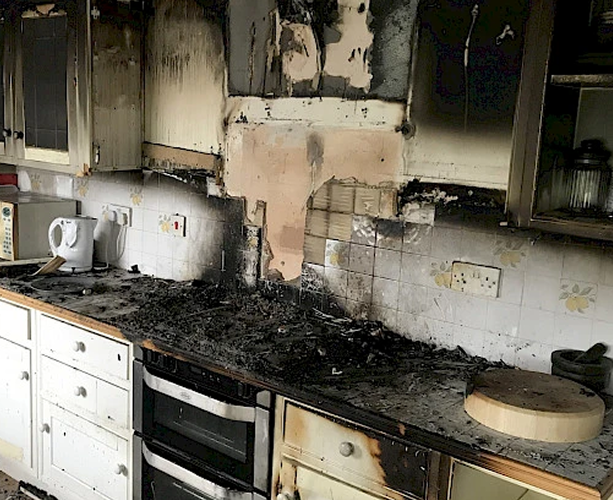
Fire and smoke damage
A kitchen fire in a two-flat sends smoke to both units and leaves hose water behind. We clean, deodorize, dry, and rebuild.
More about fire damage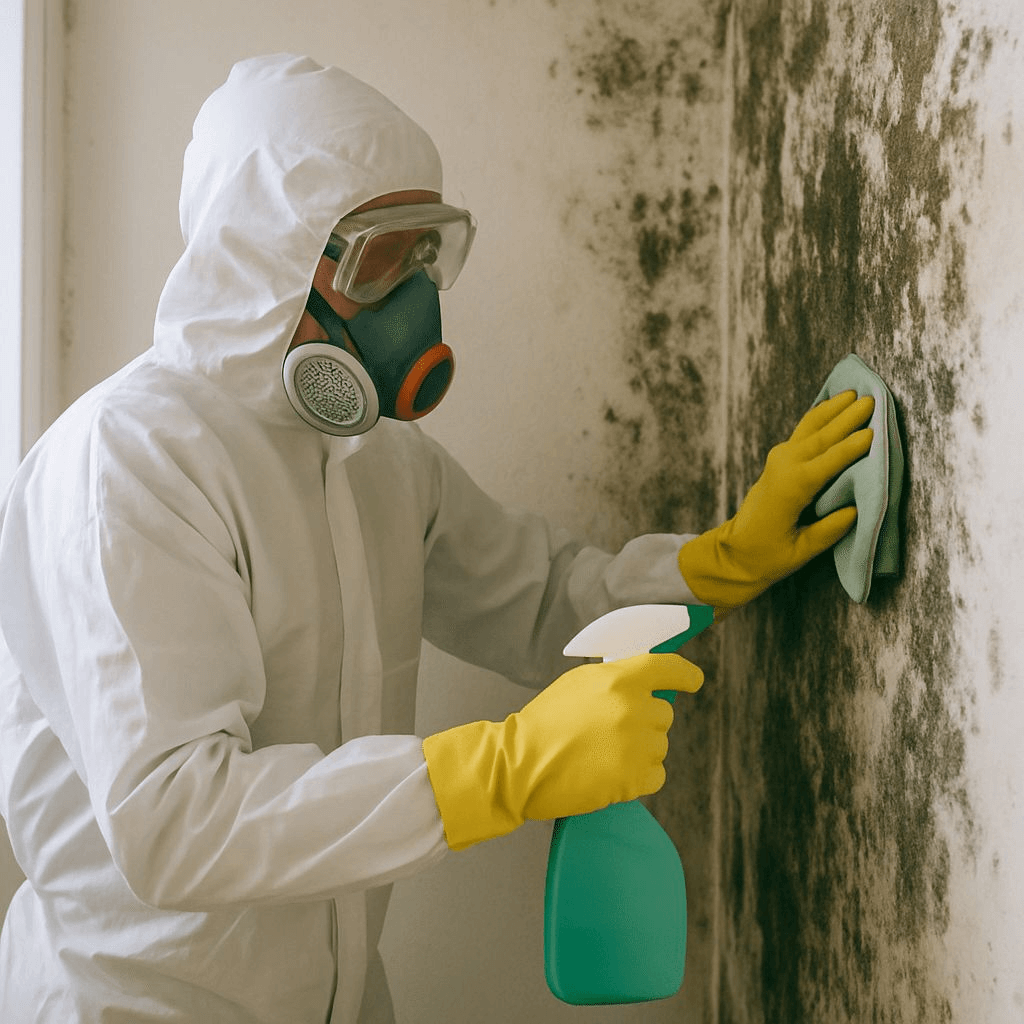
Mold remediation
A finished basement that stayed damp after a backup is where Chicago mold usually starts. We dry it and remove the growth.
More about mold remediation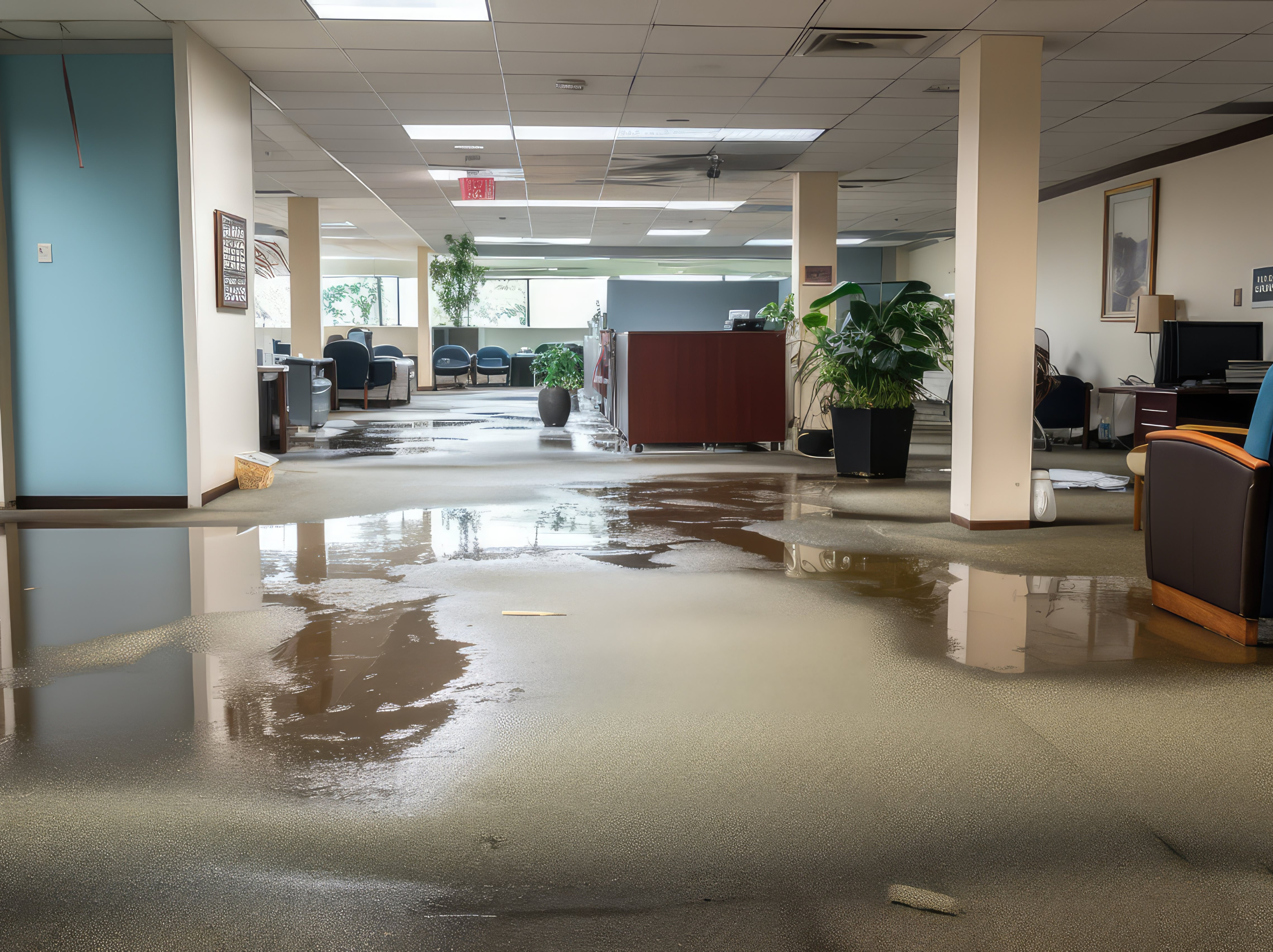
Commercial restoration
In older storefront buildings, water from upstairs reaches the shop below. Drying runs around your hours, and the paperwork goes to your carrier.
More about commercial restoration
Reconstruction
Plaster walls and vintage trim in bungalows and greystones are matched during the rebuild. The crew that dried it rebuilds it.
Ask about repairsNot sure which kind of damage it is?
Send a picture or tell us on the phone, and we will match it to the right service.
Call 24/7, day or night(773) 839-9204
Step by step
Our Water Damage Restoration Process in Chicago
Four stages, same order, on every Chicago job.
You call, and we cut the water off
Phone (773) 839-9204 around the clock. We shut the line, cap the break, or deal with the sewer water rising through the floor drain.
We inspect and document
We meter the basement walls, the floor framing, and the plaster upstairs and photograph every wet area.
We pump out and dry
Sump and trash pumps clear the basement, ruined finishes come out, and drying gear runs until the readings settle.
We rebuild and walk it with you
Finished basement walls, floors, and trim go back in, and we go over each room with you.
Water near outlets or the electrical panel?
Keep back, and leave the switches and cords alone. Phone us for the next safe step.
Insurance and claims
How Insurance Handles Water Damage in Chicago
Illinois homeowners policies generally pay when a pipe or supply line breaks without warning. Sewer backup usually needs a separate endorsement, and floodwater needs flood insurance. Coverage depends on your policy.

What your adjuster will want
- The date of the backup or leak and its cause, such as a floor drain or a frozen pipe
- Photos of the basement, the drain, and each wet room
- Ruined belongings carried out and kept for the adjuster
- Receipts for the plumber, rodding, sump work, or a hotel
What we send them
- Photos of the drain or pipe and every wet room
- Readings for the basement walls, floors, and upstairs plaster
- An estimate laying out drying and rebuild work
- Notes for the adjuster separating a sewer backup from a pipe burst, which policies treat differently
Where Our Chicago Team Works
We work across Chicago and the nearby suburbs, including the communities listed below.
Up to 45 miles around Chicago
Not sure if you're in range? Call (773) 839-9204 and ask.
Including
- Elgin
- Aurora
- Lombard
- Wheaton
- Elmhurst
- Evanston
- Naperville
- Schaumburg
- Des Plaines
- Orland Park
- Tinley Park
- Buffalo Grove
- Oak Lawn
- Hoffman Estates
- Arlington Heights
Nearby locations
Looking for a Different Location?
On the wrong page, or is another location closer to you? Here are our nearest locations.
St. Louis, MO
View water damage servicesCleveland, OH
View water damage servicesNashville, TN
View water damage services
How fast can you get to me?
We can be at your door within 40 minutes. Call (773) 839-9204 and give us your address.
Does an Illinois homeowners policy cover water damage?
Usually for a sudden pipe or supply line break.
Why do Chicago basements flood during heavy rain?
Much of Chicago's sewer system carries stormwater and sewage in the same pipes. During an intense storm those pipes fill, and water can back up through basement floor drains. The July 2023 storm flooded tens of thousands of basements on the West Side and in nearby suburbs.
Will fans dry out a wet basement?
Not on their own. Water soaks into the concrete, framing, and drywall, so a basement needs dehumidifiers and moisture readings until it is dry.
Does a backwater valve help in a Chicago basement?
Often. A backwater valve or flood control system can keep sewer water from coming up through a floor drain when the combined sewer is full. Have a licensed plumber size and install it.
Can I thaw a frozen pipe myself?
If it has not split yet, open the tap and warm it gently. If water is already leaking, shut off the main in the basement and call us.
Is the furnace safe to run after the basement flooded?
Not until a qualified technician checks it. Wet burners, controls, or wiring make it unsafe, and the water heater needs the same check.
How is water damage priced in Chicago?
Gallons, clean water versus sewage, and the rebuild set the price. Fill in the short form at the bottom; you get the price in writing, and your adjuster can get it too.
Can we stay home during the drying?
Usually, if the basement was the only area hit. Sewage upstairs, no heat, or no power usually means a short stay elsewhere.
Day or night
Water in Your Chicago Home or Business?
Call (773) 839-9204, 24/7, day or night. We can be at your door within 40 minutes.
Call 24/7, day or night(773) 839-9204Or ask for a free inspection online
Leave your name and number, and a Chicago project lead will call.
Need help now? Call (773) 839-9204